Inside Italy’s First Founder House: Gaia Catalano and Alberto Ravasini on Underdogs, Community, and What Comes Next
In July 2026, two H-FARM College students turned a spontaneous favour — a free office for the summer — into the Italian Founders House: one month, one house, seventy early-stage founders, and zero cost to any of them.
Three days after the program closed, Gaia Catalano and Alberto Ravasini spoke with StartupReporter about how it happened, what surprised them, and why they think Italy’s underdog founders are its most underrated asset.
Sasha: Let’s go back to the beginning. How did this actually start?
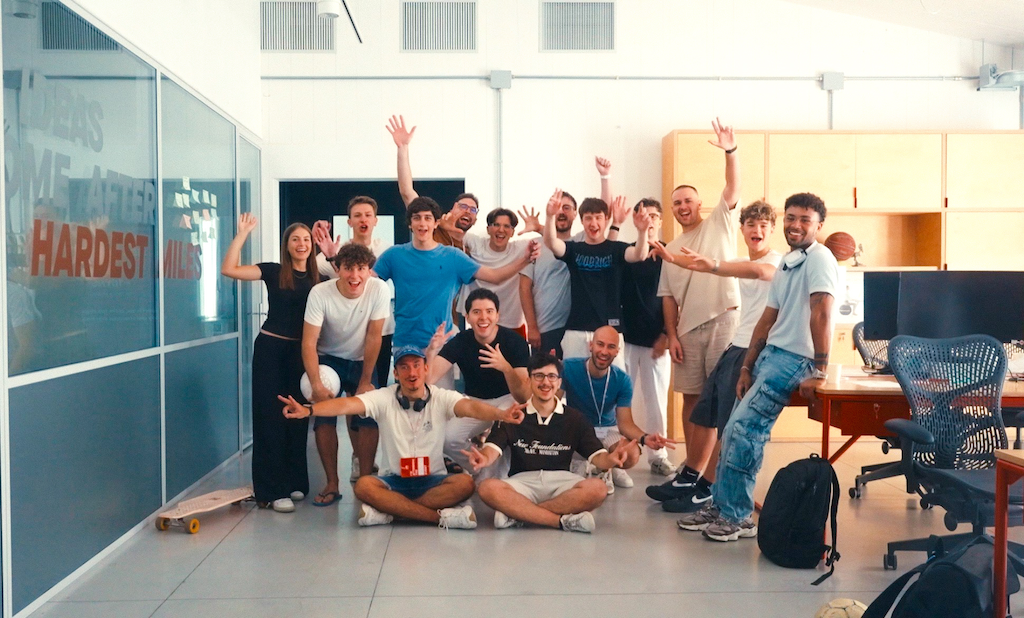
Gaia: Alberto had just spent three months in San Francisco working on his own startup and immersing himself in that environment — he was curious to see the difference with Italy. That trip really inspired him: the constant flow of events, the energy around innovation happening every week. When he came back, he was supposed to return to Parma, his hometown, but he came to H-FARM first to sit some exams. Once he was back in that environment, he decided he wanted to stay for the summer.
He asked Zeno — who leads the innovation and startup side at H-FARM — if he could work out of an office there and invite a few friends who were also building startups. Zeno said yes, but told him: give this a name, make it something bigger. That’s really how it started — quite random. And then they gave us the house too: dormitory-style, and the whole month completely free. They basically said, do something with it.
Alberto: Honestly, I’ve always had this fire inside me. I had it in San Francisco too — if anything, San Francisco fuels that fire even more, because you’re surrounded by people who have it just as strong, or stronger.
When I came back to Italy, I didn’t come in with big ambitions or a plan — I just said I wanted to bring a few friends along, called people up, and said Come here, because H-FARM is genuinely generous with space in the summer and could easily host more people.
Then Zeno told us not to make it a hangout between friends — put a name on it, make it something. So Gaia and I put together a plan in two days and sent it to him. He convinced Riccardo Donadon, and within about fifteen days — two videos on social media, a few calls — we had a huge number of applications.
So, short answer: there was no grand plan. But for me, there had always been this underlying idea of eventually building a community. I originally thought more in terms of a venture builder. Still, the more I studied this market —the Italian one —the clearer it became: what I actually want is to build this hub, this program for early-stage startups—for the underdogs.
Sasha: With only twenty spots and three hundred applications, how did you actually select who came?
Gaia: Since we only had a limited number of spots, we decided to take people who already had a project with real traction — that was the first filter. Then it got harder, because a lot of applicants wanted the last part of July specifically, so beyond selecting people we also had to fit them into the calendar.
Someone might deserve the whole month, or maybe just one or two weeks, depending on how much value we thought they’d bring to the house.
We had around seventy people pre-accepted, and we still had to narrow that down — phone calls with everyone, gauging how excited they were to be part of this, how far along their startup was, and honestly, why they wanted to come to IFH specifically.
One founder we spoke to had made a hundred thousand euros in the last month alone through his marketing agency — the kind of traction that made the decision easy.
Sasha: If you had to name the real metric of success for this first month, what would it be?
Gaia: Right now, I’d say the biggest value has been the connections. Both Alberto and I, and everyone who was in the house, met a lot of interesting people — participants and guests. You’d get the contact you needed, because even if the person in front of you couldn’t help directly, they knew someone who could. With twenty people in the house every day, you’d always find the connection you needed.
There was one girl in particular who was incredibly sharp about this. The moment a guest arrived, she’d send a LinkedIn request on the spot, but she’d also announce it to the whole group in the chat: “Hi, I’m Valentina, my startup is Kirke, I’m looking for investors right now.” And investors would actually respond with interest immediately. She made an enormous number of connections that way — obviously you have to know how to use the opportunity, but I think that’s exactly what everyone will carry forward from this.
Sasha: The program ran through July. There wasn’t a formal Demo Day at the end — why not, and what’s the plan now?
Gaia Catalano: We didn’t manage to do it in August, honestly — everyone was leaving the offices for the summer, and it was hard logistically. We’re planning something for September instead. We’re not sure yet if it will be an actual Demo Day, but there will definitely be an event where everyone from the month, plus some selected founders, will pitch their startups.
Sasha: What’s next for the house — Italian Founders House 2.0, as you’ve called it?
Gaia: Right now we’re still studying the business model. We spoke with Riccardo Donadon, and he’s genuinely excited about the project — it’s close to something he tried to bring to H-FARM back in 2010, but the timing was wrong then; nobody was even talking about startups in Italy yet. He believes this is the right moment now. What Alberto and I want to do is relaunch in October and run it year-round. There will be 4 batches a year, 3 months each, fully free, where we accelerate startups and we bring them in front of investors — the main challenge that we have right now is to find support to give these places for free for all the selected participants — but we believe we can pull it off.
Sasha: A month like this changes people. What did you personally learn about yourself?
Gaia: That dreams can be reached, somehow — you have to believe in them fully. That’s something Alberto kept repeating, especially after San Francisco, because he’d literally seen every Y Combinator startup, every founder who’d made it in, and realised they were kids just like us — nothing especially different about them. So the takeaway is: anyone can do anything; you have actually to start doing it.
What we’re thinking about for October is a much bigger project than what Italian Founders House was this summer — and that’s both scary and, honestly, exciting. We already built all of this in two weeks. People keep writing to us every day on LinkedIn, which has been amazing. That tells us this isn’t a nice-to-have — it’s genuinely a need for anyone building a startup in Italy right now. We think it’s the right moment.
Sasha: Is there something you wanted to raise yourself, about the project or the people you met?
Gaia: One thing I always want to bring up: we received very few applications from women. Out of roughly three hundred applications, maybe ten to twenty were from women — and a lot of them were very young, without a project mature enough yet, which wasn’t our target for this round. That genuinely disappointed me, and it means the responsibility is on us to go actively look for women building startups, not just wait for applications to come in.
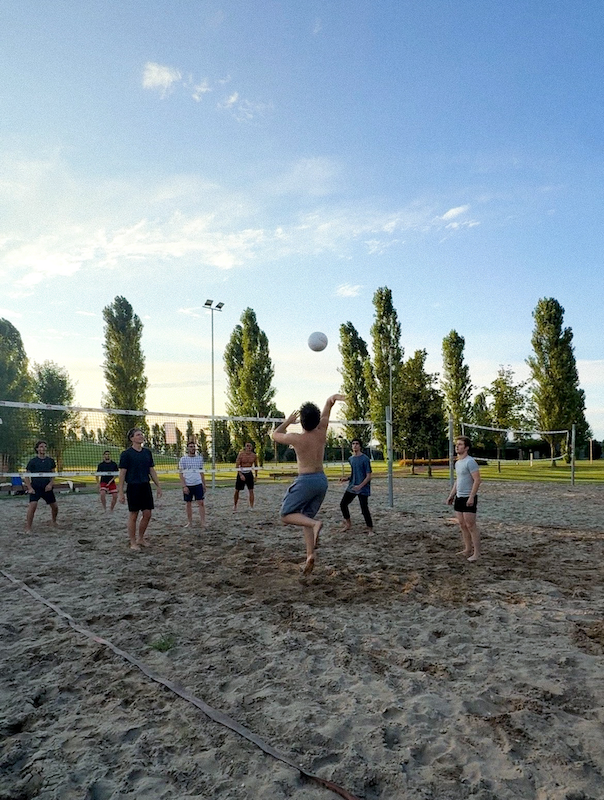
We did manage to find some, thankfully — there were almost always at least two women in the house each day, sometimes four, so a fairly low percentage, but a constant presence throughout the month. It’s something we want to focus on going forward, because it’s a shame that women don’t apply as much — it’s not that women don’t build startups, but maybe in some places the right information doesn’t reach them. That’s something we need actually to investigate.
Sasha: What was the hardest decision either of you had to make this past month?
Alberto: We were essentially guests the whole time, so every time something came up, our answer was “okay, thank you,” and then figuring out how to make the most of it. For example, the program was originally supposed to run for two months. Then everything got pushed into July, and two days before August we had to fit seventy people — the whole Italian Founders House selection — into a single month. So really, the whole program was about adapting to what we were told; nothing was set in stone.
But there was one decision that was genuinely mine. Halfway through the program, I realised: I want to stay in this environment, surrounded by these people, all year.
If we build this into a properly structured year-round program, we have real potential — a lot of people in the Italian startup world know us now, and I could build this without needing anything from anyone else, with a space of my own. So I decided to set my own startup aside and put the focus fully on this. That was the hard part — choosing to stop something I’d been building, to make room for this instead.
Sasha: Looking at the seventy people who came through the house — what made you say “this is a founder I’d back,” or “this is who I’d want as a co-founder”?
Alberto: For the initial screening, with three hundred applications, we had to move fast. I’d look for whether there were any real KPIs in the description — revenue, users, anything concrete. If there was no number at all, that was already a warning sign. Then I’d check LinkedIn quickly. That’s how we built the pipeline. But honestly, once the program actually started, almost everyone we selected turned out to be far stronger than we expected.
One founder hadn’t listed a single number in the application, and it turned out they’d done around thirty-seven thousand euros in revenue on a genuinely impressive platform we hadn’t had time to understand at the application stage fully.
Beyond the numbers, the thing I noticed most was uniqueness. It’s the same pattern I saw in San Francisco — the strongest founders are the most particular ones. They have a different story, their own way of thinking.
That’s what makes you actually want to listen to someone: not just that they’re doing things, but doing them well, in their own way.
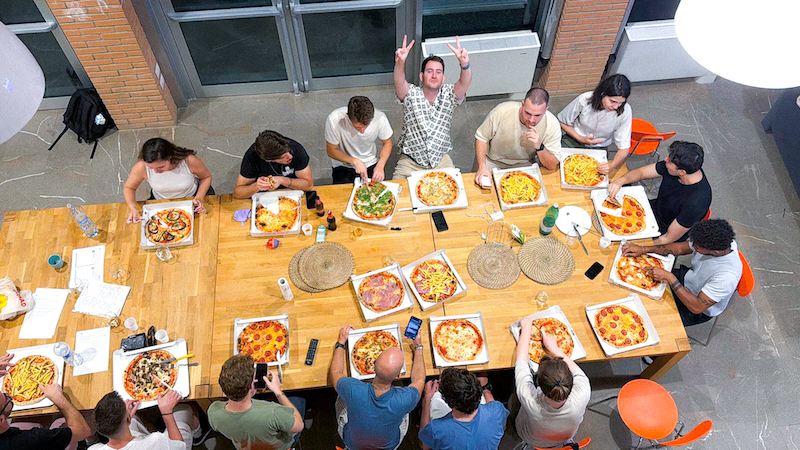
Gaia: The other big factor, for me, is humility and openness to feedback. The moment you question yourself and genuinely accept criticism, however harsh, you grow. We actually built a format around this — every evening after dinner, something we called Roast My Startup.
Usually the newest arrival would go through it, almost like an initiation: one minute to pitch, then a few minutes of questions they could answer. Then came the feedback round — everyone wrote down positive and negative notes anonymously, and Alberto or I would read them out loud.
The person receiving feedback couldn’t respond or defend themselves — they just had to sit there and take it in. It was tough to watch sometimes, but people told us it genuinely helped them question things they’d been taking for granted.
Sasha: If a founder or an investor reads this interview tonight, what’s the one thing you want them to do tomorrow morning?
Alberto: For a founder: apply for this program, and hopefully make it through the full three months next time.
For an investor — it’s less about “investor” in the traditional sense and more about a philanthropic mindset: understand the potential of the underdogs, because that’s exactly who we’re looking for.
They’re the ones who make the real difference, and they’re also the hardest to find — both for corporates and for VCs, because it usually happens through direct contact, cold emails, that kind of thing.
VCs put maybe ten per cent of their capital into this niche; the rest goes through the usual circles, word of mouth, and nothing more. And yet the data shows that sixty-four per cent of founders who took startups to unicorn status had never been a CEO before. They came from either top universities or from nowhere at all. It’s a niche that deserves to be uncovered and taken seriously.
Gaia: I agree.
For investors, it’s really about questioning what they’re actually looking for — because a lot of the time, what they say they want is diversity, and diversity is exactly what’s hard to find sitting in your inbox. It doesn’t come to you easily; you have to go looking for it.
What we’re building is designed to surface exactly that diversity — which is the value investors say they’re chasing.
Sasha: One last one — how would you each describe what you learned from the other, this past month?
Alberto: I’m not great at giving compliments, but honestly — what I learned from Gaia is that no matter how hard you think you’re working, there’s always someone working harder. And in my case, that’s Gaia.
I thought I was already all-in, thinking about this constantly, but she does even more. Two or three jobs at once, morning until night, and she keeps going. I learned that even when I think I’m determined, there’s someone next to me who’s more determined, and who works even harder.
Gaia: From Alberto, I learned that dreaming is actually the right thing to do — something you should let yourself do.
I’ve always been a very grounded, concrete person, and sometimes if you’re too grounded, you don’t go anywhere, because you never push past what you think is possible. That’s really what I take from him.
Sasha: Anything you want to add — about the project, or the people you met this month?
Gaia & Alberto: Something we both noticed is that founders, as a group, tend to be genuinely good people.
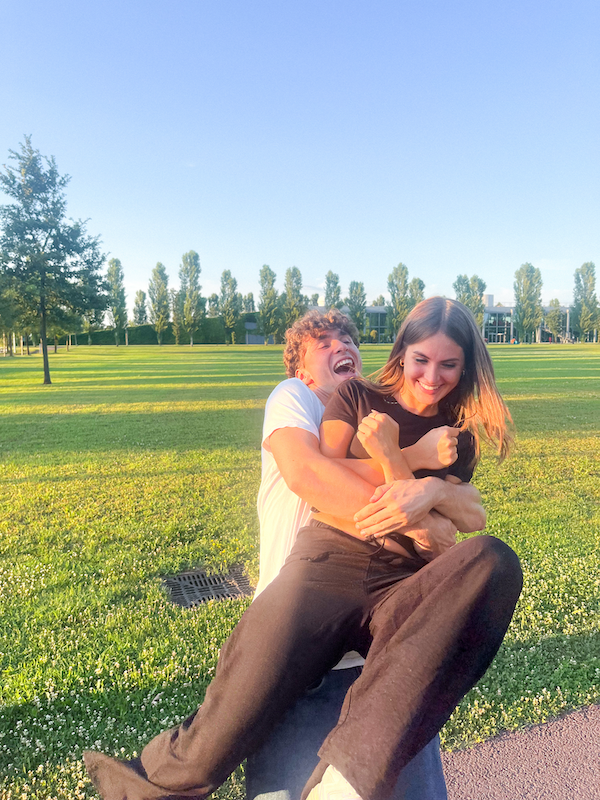
They usually pour all their time into their project, which can make them seem a bit unusual — they go out less, that kind of thing — but at the same time, they’re genuine, respectful of each other and of the space they’re in. That’s not something you can take for granted with seventy people, roughly ninety per cent of them men, sharing one house for a month. We didn’t have a single problem.
The other thing worth underlining: the underdogs are the most valuable asset in this market.
Everyone chases who’s already performing, who’s already been backed — the usual circle. But the data backs this up: sixty-four per cent of founders who took a company to unicorn status had never been CEO before, and came from either elite universities or nowhere notable at all. It’s a segment of founders who make less noise, stay under the radar — and who end up making the real difference, in scale-ups and everywhere else.
Italian Founders House is planning a relaunch for October 2026 as a year-round program. Gaia Catalano and Alberto Ravasini can be reached via LinkedIn or Instagram @Italianfoundershouse for founders interested in applying, or for investors and partners who want to get involved.
Sasha Komarevych conducted this interview for StartupReporter.eu. AI tools were used to help transcribe, structure, and edit the raw conversation into this Q&A format; the final text was reviewed and approved by the interviewees before publication.
0 comments