It’s a Movement, Not the Summit: Cristian Frigo on Failure, Ownership, and To The Peak
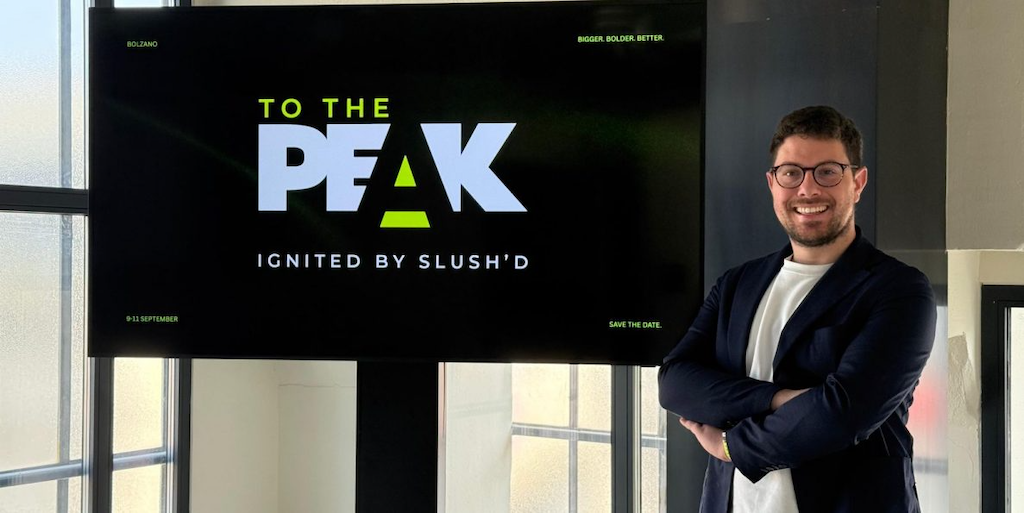
StartupReporter.eu spoke with Cristian Frigo two weeks before To The Peak — the conference he founded three years ago in Bolzano, back when it was still called Bolzano Slush’D.
Since then he’s also become Ecosystem Lead Southern Europe at 28DIGITAL, founded Beyond Venture (dedicated to founder mental health), and picked up WellFounded’s “Best Leader in Founders’ Health” award.
But none of that is actually what stuck with me most from the call. What stuck with me was realising that behind a CEO title nobody uses — he introduces himself as Head of Partnerships — there’s a fairly precise idea of what it means to build something alongside other people, not above them.
To The Peak takes place in Bolzano from 9 to 11 September, with a guaranteed term sheet of at least €460,000 for the winning startup — a first for Italy.
You wrote your Master’s thesis on fear of failure and founder wellbeing back in 2021, years before the topic became central to public conversation. What drew you to it?
Studying the startup world, I noticed we talk a lot about success but very little about what’s actually 99% of the reality: failure. I wasn’t so interested in who makes it – more in how the people who don’t make it react.
I ran a study across 500 entrepreneurs in Europe. For some, fear of failure had a negative impact on mental health; for others, they actually needed that fear to perform better. One factor moderates the relationship: passion for what you do.
That’s where my friendship with Dr Jack Kreindler, Founder and CEO of WellFounded Health, came from too – he focuses on exactly that group, people who didn’t make it, or made it with real psychological cost, as well as on entrepreneurial performance and longevity.
You went on to build Beyond Venture around founder mental health. Is there a conversation that’s stayed with you?
More than a founder, actually a VC. Because the pressure hits them too – they’ve got LPs to keep happy. I think of a Berlin-based impact fund, whose partner experiences the struggles first hand.. Or an ecosystem builder who’d been one of the biggest names in Singapore and ended up hospitalised for six months with burnout. It’s not just a startup problem, or a founder problem. It runs through the whole ecosystem.
There’s an American initiative I’ve grown quite attached to, the Founder Mental Health Pledge. They push for a dedicated clause in term sheets and contracts between founders and VCs – a budget founders can put toward therapy, nutrition, general support.
You moved from TechQuartier in Frankfurt — a more structured corporate world — to building To The Peak from scratch. What did you keep, and what did you leave behind?
TechQuartier was already something in between, honestly – 25 employees, not rigidly corporate. But with To The Peak I wanted to push much further on ownership, on team empowerment. That’s what I think sets us apart: everyone is part of the outcome, not someone carrying out decisions made above them. That’s why online I don’t call myself CEO – I’m Head of Partnerships, and almost everyone on the team has some “Head of” title. Legally, sure, I’m the one accountable. But I wanted to build something where people could keep experimenting, even if it meant getting things wrong. The first two or three years were exactly that. Now comes the pivot – actually running a business.
You’ve said you didn’t want to build “just another event.” What did you cut, or refuse to do?
Two things. A stage where speakers aren’t just there to talk about their own success — they come to genuinely give back, to support people who haven’t made it yet. And care: the highest standard not just for speakers, but for how we welcome every single attendee.
So people go home thinking “that was great, I didn’t even stress myself out networking.” Not ten hours sitting and listening to someone — a relaxed environment where something real still gets built.
The team went from 15 to 26 people in a year, and today you’re around thirty core people plus 45 confirmed volunteers – roughly 80 on event day. What breaks first when you scale that fast?
Good question. [thought about it for a second]
Accepting imperfection, for one. Not being looped into every decision — trusting other people has always been genuinely hard for me, and when you scale this fast you’re forced into it. You have to let go, and hope the people on your team pick things up.
That’s the biggest fear when you scale: it stops being “your” company. It becomes something that depends 99% on what other people do, not on you. I could work day and night and it wouldn’t change the results of what’s already built.
If it weren’t for Gloria, our Head of Programme — a genuine top performer — we couldn’t guarantee the same level today: 100+ speakers, 50+ investors. It’s gratitude, because I can’t do it alone anymore. But it’s also fear, because I genuinely depend on people who mostly still work on their free-time.
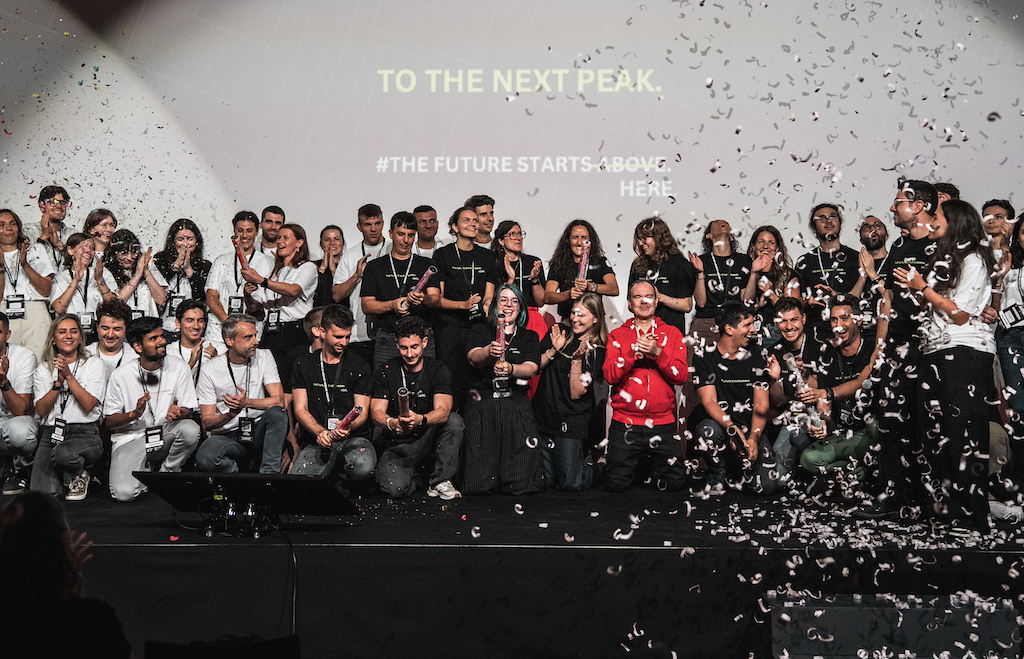
Online, you call To The Peak “the world’s biggest startup festival, brought to Italy.” Slush in Helsinki has a very specific DNA. What makes Bolzano different – not a copy?
Actually, the website says “where founders meet world-class opportunities,” not “the best event in the world, brought to Italy” — that’s not quite the right read. The idea is to take what’s genuinely world-class in Slush’s values and, with Peter [Vesterbacka] and the whole advisory board, build something with its own USP on top of that.
Our positioning is doing this somewhere whose uniqueness is already desired by everyone – the Dolomites. There’s huge international appetite: a lot of Americans want to come and treat it almost like a luxury mountain retreat. I think we’re one of the few events in Italy that isn’t a tech event but a genuine fan event – built for builders. Other Italian events have big stages, but no startup competition with real money on the table, no matchmaking where investors actually circulate instead of staying on stage. We want to be the annual meeting point genuinely connected to real institutions – such as the Italian Trade Agency and 45 VC funds we bring in from across Europe. None of that is a given.
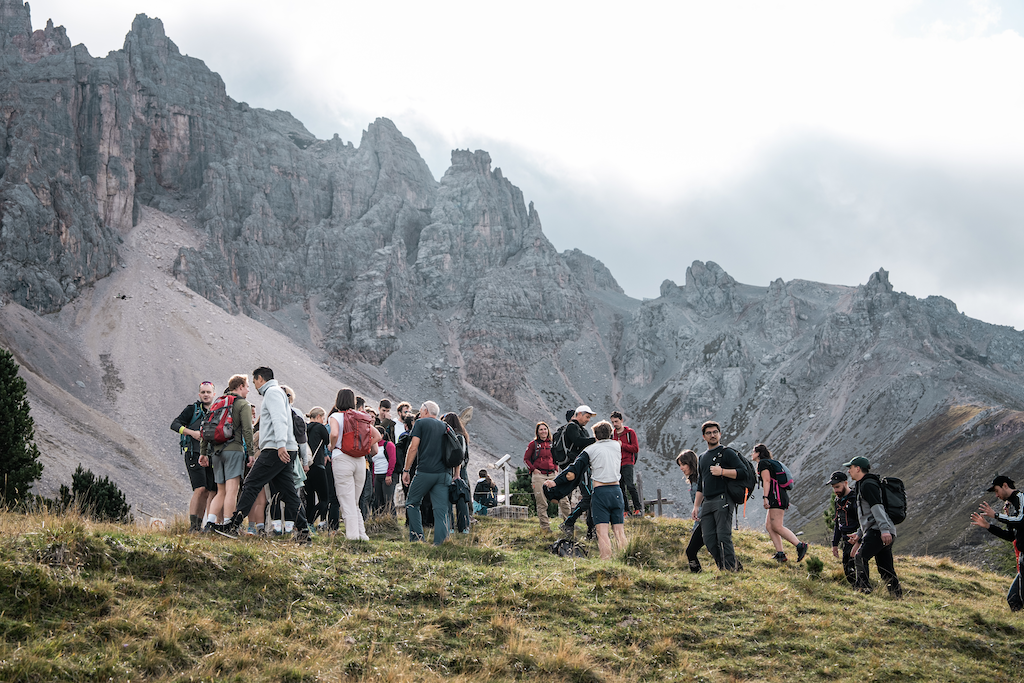
The guaranteed €460,000 term sheet with 360 Capital and tba network is a first for Italy. How did the idea come about, and what was hardest — getting investors to commit before knowing who’d even be on stage?
I’ve had it since the start. But it took three years, as everything does. Asking a fund like 360 Capital to put half a million on the table with their eyes closed isn’t easy — we had to prove ourselves for two years, consistently bringing real-value startups to Bolzano. In year three, 360 said yes; the tba network followed.
The numbers speak for themselves: nearly 240 applications for the semi-finals, so already a 10% screening. The top 0.5% wins the term sheet — and I can say, off the record, it might end up being more than €460,000.
This year we’re doing it with Ascensore Media, Italy’s “Shark Tank” of the startup world. What we care about is getting there earlier – not picking startups that are already established, as you often see in Italy, but finding hidden gems before they become internationally relevant. One of our next steps as an organisation is becoming a fund ourselves – raising our ticket beyond the €460K and getting onto the cap table of the best startups.
A conference alone isn’t a scalable business. What’s the real economic model?
Right, the conference itself doesn’t make money directly. The interesting part is capitalising on the deal flow – building a platform where the team, with a pan-European network, gets onto the cap table of the best founders and supports them from day one.
83% of tickets were sold before early bird even closed. Did that surprise you?
Yes – though not so much the percentage, the quality of the people buying them. Selling out a thousand-person event isn’t impossible; What’s much harder is finding real value among those thousand people. Same on the startup side: 60 selected out of more than 300 applications.
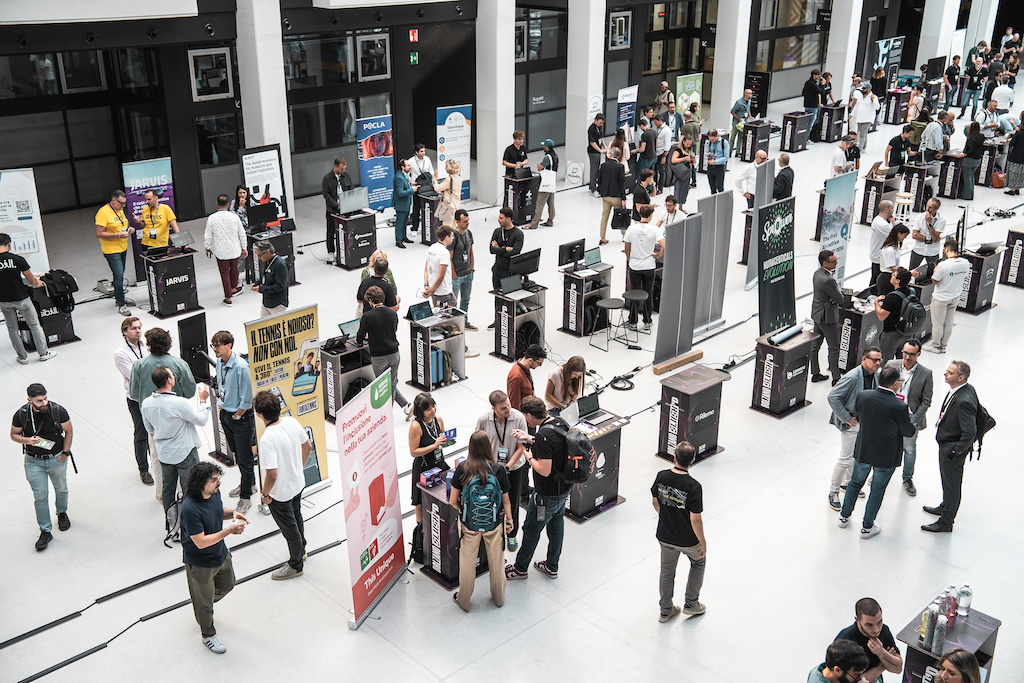
The mountain comes up a lot when you talk. Jack Mardack, co-founder of Oyster, is hiking with founders this year, with the line “the view isn’t the point.” So what is the point?
[laughs] Probably one for Jack, honestly. He was one of the earliest angels in Oyster, now a unicorn. First time in Italy for him. The fact that he’s coming to the heart of the Dolomites for a full week, and specifically wanted to join the walk, says a lot — he’s also a social entrepreneur, believes strongly in the social side of building companies, in creating something with a positive impact.
When I told him about To The Peak’s metaphor – that it’s not about arriving, not even about the summit, but the desire to keep moving toward something higher — he fell in love with it. Those are the core values of To The Peak, really.
Why put GPs, LPs and founders on a mountain instead of a stage?
You get real connections. Almost friendships. It’s not a ten-minute one-to-one where you’re just there to show how good you are — it’s a walk, and you end up talking about life too, not just work. Even when there’s no direct investment outcome, I think it builds much closer relationships. Which, in the end, builds a more united ecosystem.
This year we’ve got two separate walks. One is the LP/GP Gathering with Luca Rancilio – Young Guns – 130 selected people, already oversubscribed. The other is the classic walk, but far more experiential this year: ice baths, cryotherapy, sound bathing, with Dr Kreindler on the science side and guests flying in from Los Angeles – announced tomorrow – talking about nervous system impact on longevity and performance. We’re doing it with WeRoad and other special partners. At some point in the day, roughly 200 people from both walks come together, right in the heart of the Dolomites.
What does success look like for you in five years — not for To The Peak, for you?
My dream is to guarantee stable jobs for the people on the team today, and to give back to the company. Having something that’s self-sustaining, that grows driven by the same spirit as now. It’s a huge challenge, because right now we’re a team driven by passion, and I’d like to get somewhere more commercially grounded without losing that energy. That’s the tricky part, really – motivating people, inside and outside the team, to reach bigger goals with the same energy. If not more.
If you went back to the Cristian of three years ago, at the first Bolzano Slush’D, what would you tell him?
Not to worry about so many things. So many problems I dragged around, ruining day after day. That’s probably what I’d say: let go a bit more. Things happen either way.
Lightning round
What do founders get wrong about fundraising? The cap table.
The most Italian thing about To The Peak? Flares in the evening.
Wasn’t expecting that one.
The most Finnish thing about To The Peak? What we want to do this year with the sound bathing.
Karaoke or hiking — which reveals more about a person? Karaoke.
The most overrated word in startup pitches today? AI.
One thing every founder should do before they turn 30? Fail at least once.
Bolzano or Helsinki? Bolzano.
To The Peak 2026 takes place in Bolzano from 9 to 11 September. [Details and tickets at tothepeak.eu]
Editorial note: AI tools were used to research and draft this article; content was directed, reviewed, and edited by Startup Reporter’s editorial team.
0 comments