From Biomechanics to Sports Tech: Antoine Lérault’s Journey with Joue-la Comme
Antoine Lérault, Founder & CEO of Joue-la Comme, is revolutionising how fans connect with athletes through technology. In this exclusive interview, he shares his unconventional path from biomechanical engineering to sports tech entrepreneurship, the challenges of building in France’s sports ecosystem, and his deeply personal vision for empowering both athletes and fans worldwide.
–
StartupReporter: Can you tell us about your journey before founding Joue-la Comme? Take us right back to your university days.
Antoine Lérault: I studied biomechanics, which is essentially mechanical principles applied to the human body and sports. Think sports science, but with a very technical approach. I earned a Master of Science in Biomechanics and Kinesiology, focusing on product innovation, how the body interacts with products, friction analysis, and motion studies – ultimately understanding how people move.
This was back in 2012, quite far away now! But the key moment was my Erasmus year in Madrid in 2009. I was surrounded by Italians, Portuguese, Spanish, and English students. It was brilliant and completely shifted my mindset about innovation.
In France, we can be quite judgmental, quite closed-minded. Madrid opened me up – it was the first time I discovered the world beyond my French bubble. That experience taught me to think differently, to be more open.
What was your original career plan after university?
My dream was to work in product innovation at Nike or Adidas – the big sports brands. I ended up at Decathlon, instead, and quickly made my way into entrepreneurship
So I tried my first startup in 2013, after a world trip to the US that gave me another mindset shift. The idea was to enhance athletic performance using biomechanical tools, allowing us to predict injuries and analyse muscle and ligament behaviour. Technically, it was sound.
I quickly discovered there’s this massive political side to sports health. Every single medical doctor, every single club – they shut their doors on me because I wasn’t a doctor. As a fan watching athletes perform at the highest level, you see the glamour. However, behind the scenes, a complex political ecosystem surrounds health and medical decisions.
That must have been disheartening. What did you do next?
I lined up an incredible opportunity to work at the French Embassy in Argentina, in Buenos Aires. This was completely different – I was managing scientific exchanges between researchers in France and Argentina. I also had the chance to develop sports diplomacy for the French Embassy — it was fantastic. I also had the opportunity to work with the Argentine Ministry of Security and sport‑tech startups to improve safety outside stadiums such as La Bombonera (Boca Juniors) and Estadio Monumental (River Plate).
So what was the pivotal moment that led to Joue-la Comme?
During COVID, I saw Cristiano Ronaldo doing skill challenges online and thought, “I can do that too” — but there was no way to show or compare. It brought me back to being 10, idolizing Thierry Henry, mimicking his moves, dreaming of connection but knowing it was out of reach for most.
Friends said I was naturally talented, but I was training 10 hours a week. I wanted to show that performance is built, not born — and tech could bridge that gap. That’s how Joue-la Comme was born — “Do it like him” — inspired by Bend it like Beckham, to bring fans and pros closer through training.
What specific problem are you solving for athletes?
Athletes produce billions of data points – social media content, physical metrics like speed, jumps, dunks – but they don’t own any of it. Think about that for a moment.
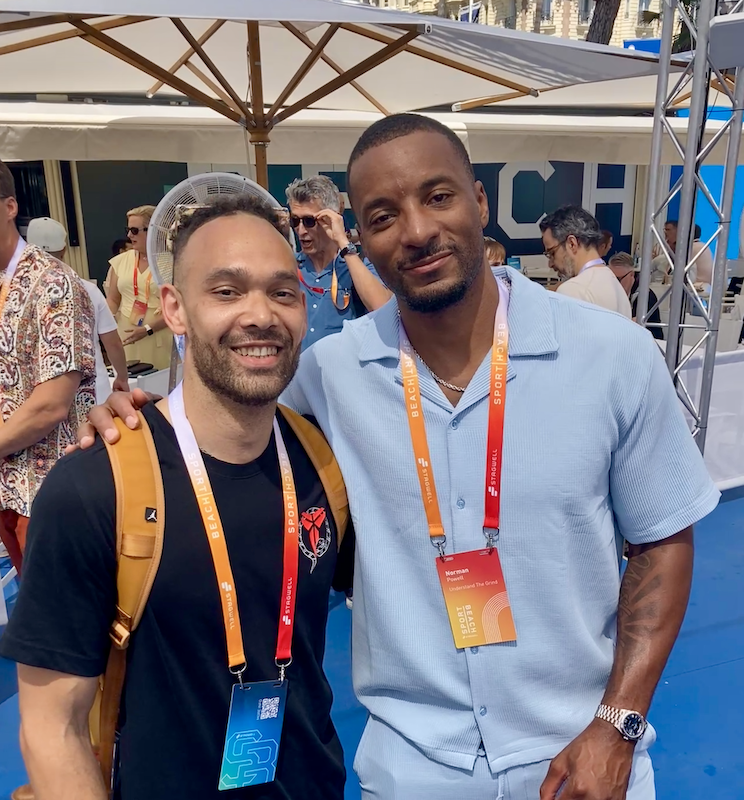
As an athlete, if your Instagram gets hacked, you have no digital presence or value. If you leave your club, you lose access to all your performance data. I recently attended the Cannes Lions festival, where I had the opportunity to speak with Norman Powell from the LA Clippers. When I explained this to him, he was genuinely shocked. He literally agreed, and told me that he would indeed lose everything if he switched franchises. He didn’t own his footage or physical data. In a way, even an athlete’s Instagram community isn’t really fully theirs, it depends on a third party platform.
The solution we’re building enables athletes to record their daily routines – something they can control outside of their clubs. We transform this into their digital asset, their intellectual property. For the first time in their careers, they can control their narrative outside the club environment.
And what about the fan experience?
For fans, there’s this massive emotional gap. The NBA has at least 82 games per year, football about 45 games. That’s maybe a quarter of the year where you have peak emotional moments watching your heroes. The rest of the time, you’re just watching highlights on repeat. How boring is that?
Most of the time, fans are emotionally disconnected from their idols. We want to change that. Imagine if, as a kid, someone had told you: “Download this app, do the same training as Henry, and if you practice enough and stay resilient, you’ll earn opportunities to meet him, get a video call, or receive a signed jersey.” I would have done that every single day.
What were the major challenges you faced in the early days?
The hardest part was getting access to athletes — they’re heavily protected because everyone wants something from them. It took 2–3 years of consistently showing up as “the trustworthy tech guy” to build credibility.
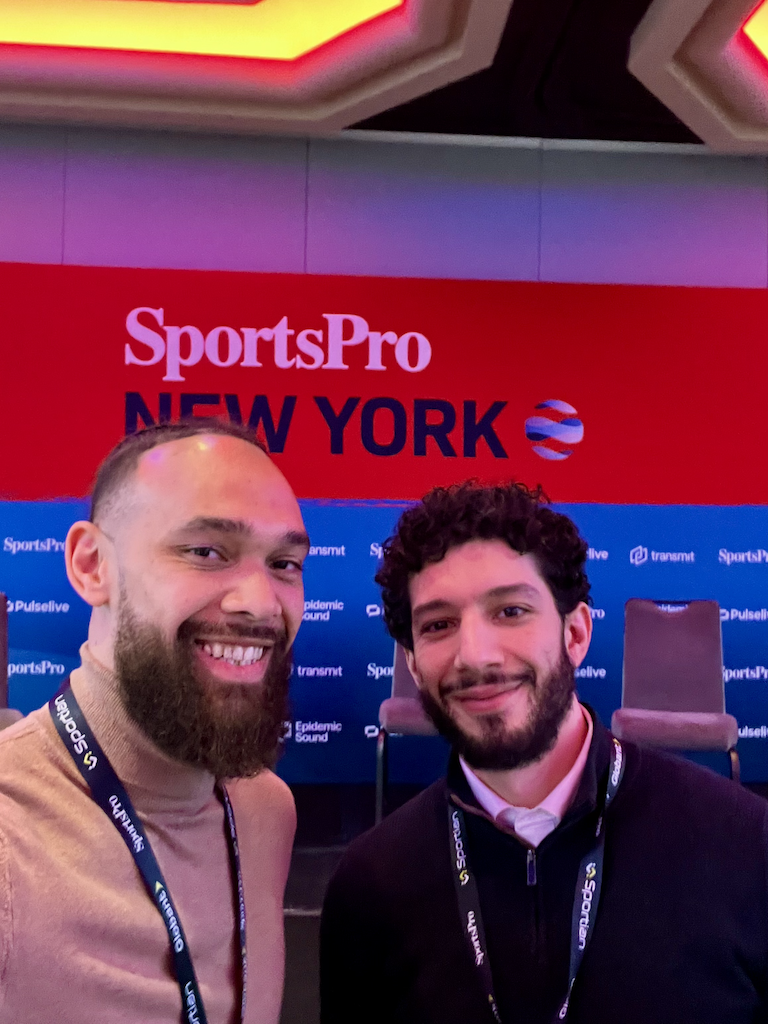
My approach was honesty and patience. I wasn’t pushy — just focused on creating real relationships. A turning point was going to New York with Abderrahmane, one of my co-founder, to meet NBA and NFL teams. The response was immediate — they got the vision right away.
How is the fundraising landscape for sports tech in France?
Being a minority founder without a business school background has offered us unexpected avenues. We’re part of Station F’s Fighters programme, they specifically support underrepresented entrepreneurs. We were also in the top 50 for the Black Ambition Prize in Europe last year.
We’re talking to way more family offices, high networth individuals and athletes turned venture capitalists, than we are to traditional investment vehicles.
Tell us about your Station F experience. What should founders expect?
Station F was a game-changer. It taught me how to simplify the pitch, focus on the problem, and speak business — not just tech. Being around major players like L’Oréal and LVMH pushed me to level up.
As a technical founder, the biggest shift was learning to communicate like a CEO. The Fighters program gave us a huge boost — from 500 applicants down to 15, that validation meant a lot. Be open, take feedback seriously, and absorb everything you can.
How would you describe your team?
Family. That’s the only word that captures it.
We all knew each other from before, and considered each other like brothers.
One day, at Foued’s wedding, the third co-founder of Joue-la Comme, we were all sitting at the same table. I mentioned my app idea, and they said, “You know what? We should work with you properly, not just help occasionally.” The timing was perfect – Abderrahmane was just returning from Japan to Paris, and Foued was getting married and had time. The stars completely aligned.
Now we work together every day, and it feels like family. We talk every single day, support each other through everything. When you find that chemistry, it’s magical.
Let’s get personal. Which book, film, or song has truly changed how you see life?
I have to go with films – I’m passionate about cinema. Two films completely shifted my perspective.
First is “Any Given Sunday” with Jamie Foxx as the quarterback and Al Pacino as the head coach. That film taught me you have to earn your place, shut your mouth, and prove yourself. Also that you have to be well surrounded to go forward “safely”. That’s the reality of sports, and it’s exactly the reality of our business.
The second is “Training Day” with Denzel Washington. I was twelve, and the film hit me hard because it showed that, no matter who you are—police captain, teacher, anyone—people crave to be entertained, whether through true‑crime headlines or personal tales, and you never really know which lens the storyteller has chosen to show you. It’s fascinating because it shows how you can have a public persona that’s good for everyone, while managing a completely different, darker side. The balance between those two sides really resonated with me.
For books, Kobe Bryant’s “Mamba Mentality” completely changed my mindset. The core message is: don’t complain about life. You think you had bad training? You got injured? Fine – go through rehab and come back stronger. Sitting there complaining and crying won’t help you.
If you could have dinner with any three people from history, who would they be?
That’s tough! I’d choose Denzel Washington first. The man came from nothing, worked hard, he trusted his gust, and gave so much back to his community. I’m fascinated by his mindset.
Obviously, Thierry Henry – my childhood idol, my third brother from the heart. I want to understand how he elevated himself to legendary status and then deal with that level of fame. Who is he personally behind all the media attention?
The third would be 9th Wonder – he’s a music producer who also teaches at Harvard. The way he masters music and creates beats whilst educating others about sampling and production techniques fascinates me.
What life event has shaped you most as a person and founder?
As a person, it was a conversation with my high school physics teacher. I was failing everything and he asked, “Do you like what you’re doing every day?” I said no. He told me, “Then choose something that makes you happy to wake up in the morning.” That advice led me to study sports, which became my passion and foundation.
As a founder, the turning point was in New York. I had two minutes to pitch my startup to a top sports lawyer in a building in Times Square, in an alley between meeting rooms. He told me, “This won’t work for superstars like LeBron—but it’s perfect for the thousands of pros who need support.” That moment made me realise: we had something big, and I was ready to drive this idea forward.
Time for some rapid-fire questions!
Coffee or tea? Coffee.
Football or basketball? Basketball.
Paris or other cities? Other cities – I love to travel.
Morning workout or evening? Evening.
Data or intuition? Intuition.
Team sports or individual? Team sports, always.
Sweet or savoury? Sweet.
What app do you use most? Instagram, though Spotify is close.
Your go-to productivity hack? Breaking big tasks into small tasks, then starting my day with simple tasks I can complete easily to build momentum.
Finally, what’s the question you wish I’d asked you?
Something like: “What’s your mission on Earth regarding sports?” or “Why do you put so much energy into transmitting your passion?” My answer would be that sports pushes you to your limits and breaks through your glass ceiling in so many ways. Your body is your vessel; you must take care of it. Sports aren’t about suffering; it’s a way of expression, a way to feel genuinely good.
At the end of the day, whatever passion you have, just go ahead and dive deep. But I want you to express that passion in the most authentic, powerful way you can.
Looking ahead, what’s your vision for the future of sports and technology?
Sports is the ultimate bridge between people and innovation — it drives emotion, global connection, and real engagement. It’s the perfect use case for emerging tech like the metaverse and digital twins.
At Joue-la Comme, we’re building a platform that brings fans and athletes closer than ever before — turning dreams into real, interactive experiences. The future is all about authentic connection at scale.
–
Joue-la Comme is currently building partnerships with athletes globally and developing their platform to revolutionise fan-athlete interactions through data-driven experiences. You can follow their journey and learn more about their mission to empower both athletes and fans through technology.
More Joue-la Comme Coverage
- Joue-La Comme SportsTech Platform Connects Professional Athletes
- Top 20 or Nothing? Why Athletes Outside the Elite Must Rethink Their Career
- Why Athletes Need to Think Beyond Follower Counts
- From Brand to Database: The New Athlete Economy
More French Tech Ecosystem Coverage
- South Summit Korea 2025 Winners: OmniShelf Takes Global Prize | AI Startup Competition
- ArcaScience Raises €6.5M to Transform Drug Development with AI-Powered Benefit-Risk Intelligence
- When Growth Loans Backfire: Knowing When to Say No
- Romain Clément Interview: Building ArcaScience to Solve Healthcares Biggest R&D Challenge
More French Tech Coverage
- South Summit Korea 2025 Winners: OmniShelf Takes Global Prize | AI Startup Competition
- ArcaScience Raises €6.5M to Transform Drug Development with AI-Powered Benefit-Risk Intelligence
- When Growth Loans Backfire: Knowing When to Say No
- Romain Clément Interview: Building ArcaScience to Solve Healthcares Biggest R&D Challenge
Related articles: Joue-La Comme SportsTech Platform Connects Professional Athletes Directly with Fans | Top 20 or nothing? Why athletes outside the elite must rethink their model | SportsTech Fungiball Secures €2.2M in Pre-Seed Funding
0 comments