Inside Iceland’s Startup Ecosystem: What a 390,000-Nation Can Teach Us About Entrepreneurship
An interview with Anna Liebel, Ukrainian-born mindshifter, former podcast host, and community builder who has spent over six years contributing to Iceland’s entrepreneurial landscape development.
The Journey from Ukraine to Iceland
Sasha Komarevych: You have lots of roles and wear many hats – you’re an adviser, facilitator for workshops, former podcast host, and you teach at the university. What brought you to Iceland, and how did your journey lead you to the local startup ecosystem and leadership scene in Reykjavik?
Anna Liebel: About Iceland – just for background, I’m Ukrainian, and I moved to Sweden in 2010 to do my master’s degree there. I was curious about higher education somewhere else outside of Ukraine. Curiosity took me out of Ukraine and brought me to Sweden.
Then, back in 2018, it was the same thing with Iceland – curiosity brought me further northwest. At that time, we were forming a family with my husband, and he was in the process of getting a new job. He’s in academia, so he would need to move around after his PhD. Due to our family plans, we decided to stay in the Nordic countries, as they are a family-focused corner of the world.
We thought we liked it in Sweden, but maybe there’s something even better. We decided to try something because we could always come back to Sweden. We moved to Iceland because we really like its nature. And yeah, six and a half years later, we’re still here.
Regarding leadership, I used to be in project management – that was my master’s education – in the corporate world back in Sweden for over six years. I always enjoyed the people part of the projects the most: how to bring the best out of people, yet how not to squeeze everything out of them so they just come home and bark at their kids or growl with their spouses. That people were part of the technical projects I was managing was something I was good at and passionate about.
When I arrived, I also wanted to focus on leadership. In a way, everyone is a leader because it’s about creating a positive influence in the best way. Initially, I worked with anyone who wanted to develop their leadership skills, regardless of whether they held managerial positions or were founders. But then I realised that I truly loved the in-depth work, one-on-one with people. I can’t work with a lot of people at that capacity and do a good job, but I still want to create a bigger impact.
So I decided to focus on the official leaders of companies or bigger departments, because if I shift one leader’s mindset, it creates ripple effects within their organisation. In a way, I work one-to-one, but it creates impact at the scale of one-to-many. That’s why I started focusing specifically on entrepreneurial leaders.
Regarding startups and how I got into that scene, it’s such hard work to build something from scratch, especially when you have to innovate, educate the market, and explain that yes, this actually solves the problem, or even that yes, this is a problem. There are numerous hurdles on the path of a founder, and it’s often very easy for them to remain in the darkness alone.
I wanted to change that. I focused on supporting founders so they understand they don’t have to go through that darkness on their own. They don’t need to feel lonely all the time. It’s a lonely journey – I cannot eliminate that, no matter how well I do my job – but I still wanted to make this journey a bit easier for those people who move our society forward.
The Iceland’s Startup Ecosystem: Small but Connected
Sasha: Iceland is a small country, a small island, and living there for six and a half years, you probably already know everyone in the ecosystem. Can you tell us what you’ve learnt about the Iceland’s Startup Ecosystem? You can compare it to the ecosystem you experienced in Sweden, or share what you want to convey to people reading about it for the first time.
Anna: First of all, I’ve only been firsthand involved in the startup ecosystem here in Iceland. Of course, I’ve spoken to people and networked with individuals in other countries, and I’m reading about ecosystems in those countries. Still, I’ve never experienced it firsthand, so it’s difficult for me to make an apples-to-apples comparison.
However, when it comes to the Icelandic ecosystem, as you mentioned, it’s a small community. The whole of Iceland is around 390,000 people. Most of them, about two-thirds, are in the capital region. So it’s a very compact ecosystem.
As I said, everyone knows everyone. I’m surprised to meet new people still – it still happens from time to time. You know this rule of six handshakes? Here, you’re two handshakes away from anyone.
I do what I call “mindshifting lunches” when I have the capacity. I invite several people who don’t know each other to my home for a meal, and we discuss leadership. It’s a very close, unscripted conversation. Even though I invite quite a lot of Icelanders, people come and say “Hey!” and present themselves with their names. So it’s like, okay, you don’t know each other, and then it takes two questions to figure out how they’re related to each other. That’s the specifics of the local ecosystem, and it comes with both its benefits and drawbacks.
The good stuff is that it’s easier to reach out to someone and find an answer. The bad thing is that sometimes it’s difficult to reach out and ask for that answer, because everyone is related on multiple levels and in many dimensions. So, you’re not only asking a founder as a founder yourself; most likely, that founder is a cousin, boyfriend, or girlfriend of a friend, etc. You also have personal relationships. Because of that, Icelanders think, “Oh, if I share this struggle, will it somehow leak somewhere else where I don’t want it to come?”
I once received a comment from a venture capitalist here early on, when I was building my network. She said, “Oh, it’s probably very good that you are an outsider. People might find it easier to open up to you because you’re not an Icelander.” It’s not because of a lack of trust, but just because it happens naturally for people.
That’s one thing that makes Iceland very special. Another aspect related to their size is the family mentality – people are very willing to help one another. This is something I can compare on a societal level to Sweden, where individualism has become too extreme, and people are too preoccupied with themselves.
Here, people stay very close to their families. It’s usually a fight over whose childhood neighbourhood the couple will live in. Sometimes we’re talking about three kilometres between those neighbourhoods, and it’s still a fight over where they will buy a house – closer to one partner’s parents or the other’s. People tend to stay close to each other, and that family mentality is also evident in the startup ecosystem. People are very ready to help each other out when you do ask questions.
The third thing I would mention is the interesting blend. Iceland is a Nordic country that was formerly under Danish rule until the Second World War, after which it gained its independence. They still have quite warm connections with Denmark, so they have Scandinavian influences. However, they also have a significant US influence, as the US has had a substantial military presence in the region since the 1940s and 1950s, which helped Iceland overcome poverty. The money and influence that came with the US brought Coke, big cars, but also many things that made their lives better.
They also have a very warm relationship with the US. This very interesting mix of being outdoorsy, going out, thinking sustainably, and then having a lot of houses that are huge, etc., creates a very interesting dynamic that influences how they build their businesses and think about building culture.
Lessons from 200+ Podcast Episodes
Sasha: You mentioned your podcast, where you speak with many leaders. Did you have conversations that impacted what you’re doing, or what’s the last impression you have that you’d like to share about what makes leaders?
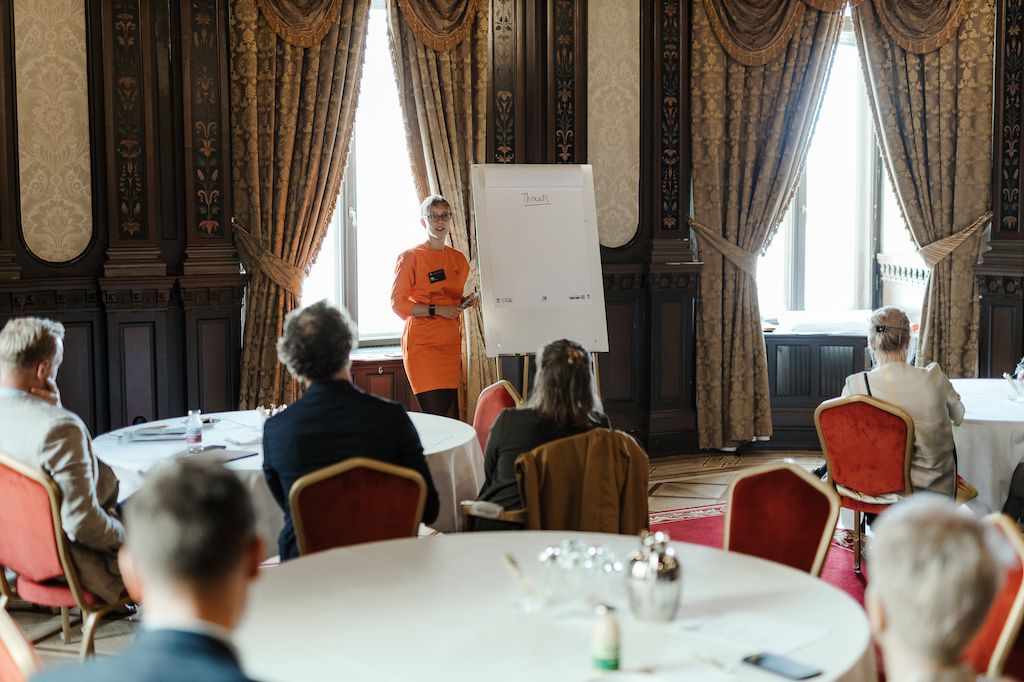
Anna: With my podcast, it was a four-year journey and over 200 episodes, and I closed it down on January 1st of this year. It was time for that chapter. But as you say, there were so many valuable conversations.
The ones that stuck with me the most were when I invited two people. I had several of those, and that created a very interesting dynamic. Once I had one of the local VCs and one of the founders that they backed sitting around the table discussing – that one was called “VCs are evil, founders are crazy” or something like this. That was very popular because it presents the same story from two different perspectives simultaneously.
Another time, it was two co-founders from very different backgrounds who co-founded an edtech company. Hearing a story about a female co-founder and a male co-founder coming from very different backgrounds, and how they view their company, was very interesting. If I were to continue the podcast, I would push for having more conversations like this, trying to cover different perspectives within the same conversation.
Generally, what I took away from my podcast was how different backgrounds can still be valuable for leadership. Let’s say you’re a tech founder and you want to work on your leadership. You can bring your experiences and knowledge from anywhere, whether it’s being a parent, participating in sports, your background in a different field, your passion for gaming, or your service in the military. All that can bring something valuable to the table for you as a leader.
I think this is something that people should have as a kind of relief, because we feel like, “Okay, if I got into a leadership role, where do I start?” Sometimes I coach people who are like, “I’ve never been a leader. Where do you start?” Start looking at what you’re already good at. Start looking at the skills that you have already mastered that are applicable, even if they’re not within your project management role or your founder role.
That should be something we do as a first step when we become a leader for the first time: look at what you’re already great at, where your energy is coming from, and leverage that. That showed me a lot because I had leaders from every walk of life – someone who used to be a priest, someone who used to serve in the army, and a captain of a submarine in Norway – and they all brought valuable experiences to their leadership journey.
Can Anyone Become a Leader?
Sasha: It’s a fundamental question, but I’d like to know your perspective. Are leaders born to be leaders, or can you become one even if you have no inherent skills?
Anna: I asked this question to my first guest on the podcast: “Can everyone be a leader?” Because I had quite heated discussions with friends about this. I liked her answer, and I would sign up under that: Everyone can become a leader if they want to, and “they want to” means they’re interested in people.
This is the crucial part of leadership for me. You can lead others, but if you have purely selfish interests and an agenda, then at some point it is not leadership – it turns into something else. But if you’re curious about people, if you’re ready to hear them, and you can respectfully disagree while still continuing to lead them, then everything else can be taught, practised, and improved.
Of course, some people have things that they can leverage from the get-go when they want to lead others. But there is nothing that people cannot tackle if they have this interpersonal interest.
I’ve seen people who lead, who are great leaders, and they are on the autism spectrum. So it’s difficult for them with social interactions, with reading people, etc. However, because of this, they’re also good at meeting people where they are, including those who are challenged as well. We also need to create diversity in leadership.
I once had a client who was asked to participate in a panel discussion, and she was like, “But I’m not the one to be on stage.” I said, “What do you mean?” She said, “I’m quiet, I speak calmly.” I was like, “Do you mean that everyone has to be jumping like Tony Robbins on the stage, and only those people belong there?” She said, “Yeah.” I said, “No, because then if everyone on the stage in that panel discussion is Tony Robbins style, then everyone who is like you sitting in the audience doesn’t see themselves on the stage, and it becomes a vicious cycle.”
We need to push all the different people onto the stage. We also need to accept everyone in leadership, as long as they are ready to engage in those interpersonal activities.
Burnout: The Inevitable Reality for Founders
Sasha: You talk about burnout, and if you are interested in people, you sometimes also have burnout. What does burnout mean for you, and maybe some practical tools that you recommend to founders of early-stage startups so they can navigate through that process?
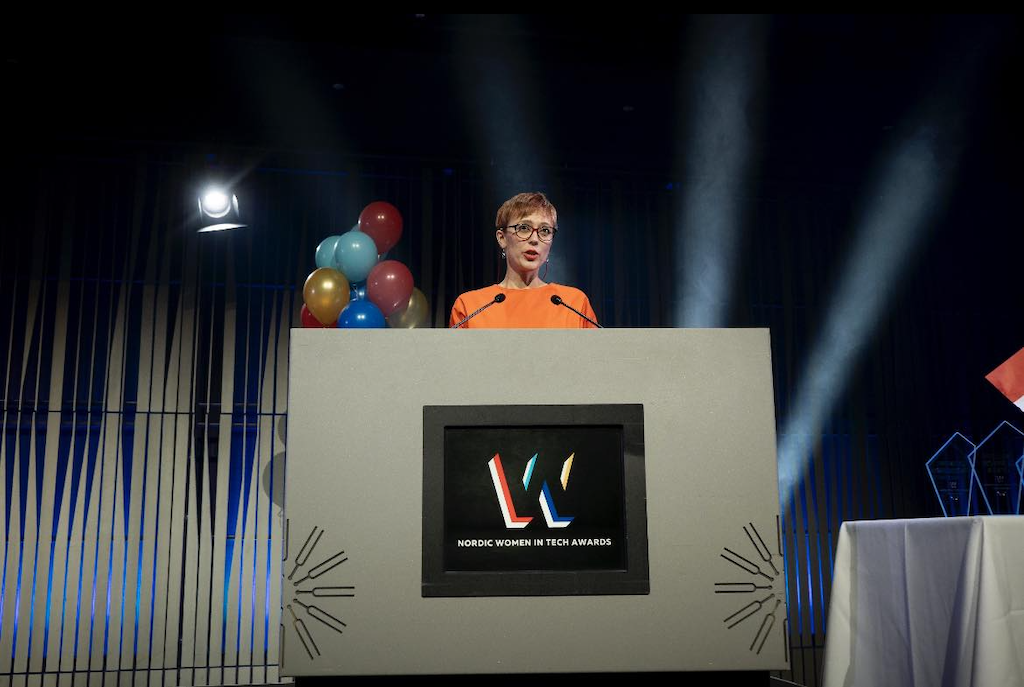
Anna: Several years ago, I had a summer project – I received a grant from the Icelandic State to have a student working for me, and I wanted to figure out how we can help Icelandic founders prevent burnout. Throughout the project, I realised that we cannot.
The more I talked to founders – serial entrepreneurs, people who have exited multiple times – I realised that burnout is an inevitable part of a founder’s journey. It just comes with the deal. People who are passionate enough and optimistic enough to start a venture despite all the hurdles on the way will inevitably be burned by that passion at some point. Since then, my focus has been on how we can minimise the adverse effects of burnout.
That’s one thing I want to mention: burnout is unavoidable. When we discuss burnout, I appreciate the definition provided by one of the interviewees from that project – a serial entrepreneur and active member of the startup community. He said, “It’s when you have been running on empty so much that you just need to lie down and rest.” That need to lie down and rest could be for one day, one month, or one year.
He said, “I’ve been through all of those stages.” At some point, he burnt out so heavily that he had to close down his business because he was not operational for two years. This is a story I’ve heard multiple times on my show – when you just don’t have the capacity, you’re away for too long. The business, even if you build it quite well, cannot operate without you for two years, and you have to close it down.
Actually, in that conversation with him, I realised that I was in burnout myself, because just two days before that, I wrote to my husband, who was abroad for a trip, “I just want to escape so that no one touches me for two days.” I was like, “Okay, I need to act.”
So what could we do with that? In the ideal world, of course, you would build the systems, structures, and habits before you need them, so that you work on everything you would need in that moment of crisis before you have it. However, in reality, that’s not how we function all the time.
There’s real advice another founder here got from his friend. He was sharing the challenges he had in his journey, and the friend said, “Okay, I have three questions for you: Did you sleep? Have you eaten well? Did you exercise?”
I think those are the things that are easiest to cross out from our lists when shit hits the fan and it’s getting tough with our business. We need to push through; we need to tackle more to-dos. But actually, that’s not usually the solution, because we are running on empty. We’re not making good decisions, we’re not productive – we’re just tiring ourselves without anything good as an outcome.
That’s something I really want to emphasise – we need to take care of the basics. I know it’s not sexy, and I know it’s not easy to put those KPIs into a business context, but it definitely pays off.
And lo and behold, this founder who got this advice – I’ve seen him in the park during the workday when I was having walking meetings, and I see him running past. We all need to do that.
I introduced a mental health day for myself back in 2021. Once a month, usually the last Friday of the month. I blocked that day on my calendar, and during work time, I have nothing to do and nothing to do. Usually, the rule is that I can have a maximum of one scheduled thing for the day, and that scheduled thing is something pleasant – it could be meeting a friend for lunch or going for a massage. Otherwise, the day is free, and I just go with the flow.
I’ll give you a note, Sasha – every last Thursday of the month, I’m like, “Maybe I should postpone, maybe I shouldn’t do it this time. There is so much to do, I won’t be able to relax because this stuff will be buzzing in my mind.” ‘It doesn’t happen 100% of the time, I’ll be transparent, sometimes I did fall into “Okay, yeah, I do want to push through and get those things done.”
But every single time I did this mental health day, it paid off. It does. You come with more clarity, more energy, and more productivity to your to-dos on Monday after. And those things that were super dramatic on a Thursday – they’re like, “Okay, I’ll do it,” and you do it.
The advice I would give is: take care of the basics – the physical ones of sleeping, eating, exercising (and exercise could be just taking a walk). Additionally, I would suggest: talk to someone and keep a journal. Create the space for yourself to reflect and understand what’s bothering you, both alone and with someone else. These five could be the pillars that really help us minimise the burnout effects.
University of Reykjavik’s Role in the Ecosystem
Sasha: Speaking about education and how a university can impact or lead education for entrepreneurs, what’s the role of the University of Reykjavik that you see in Iceland, and how does it lead entrepreneurial talent?
Anna: The University of Reykjavik is the only private university in Iceland. Generally, we don’t have that many universities, but this is a private one. It’s still heavily subsidised by the country, but that means students still need to pay tuition fees.
Our reputation is that we are close to the industry. That’s something that distinguishes Reykjavik University from the others – we have a lot of collaboration on thesis projects, courses, and other initiatives. We’re close to the companies and the ecosystem overall in the country. You will have more practical courses that are application-focused.
Another requirement is a course that every student must take. In the spring, there’s a three-week course that everyone takes – approximately 500 to 600 undergraduate students participate together. It’s an entrepreneurship and innovation course.
They are teamed up, five to six people in a team, and have three weeks to create a startup idea. Ultimately, they’re pitching it and conducting a demo day. Of course, they don’t develop an MVP and things like that, but they go through the process. They practice presentation and pitching. There are numerous talks by people from the ecosystem, including venture capitalists, representatives from organisations that provide national grants, and founders who share their journey.
It’s a very intense course that gives you a taste of what entrepreneurship is about. Of course, they don’t educate you on everything – they can’t do it in three weeks – but you get the idea, or many ideas of what it is about, and then you can dive deeper into those. This is a very special thing – this enforced entrepreneurship course for everyone. At the same time, I think it creates a beautiful foundation for them to continue.
Also, the university is a co-owner of some organisations that support the startup ecosystem. We have Klak here in Iceland, which is the ecosystem that runs the accelerators. They run the Golden Egg, which is the competition for idea-stage companies – it’s a very popular one. Reykjavik University is a co-owner of Klak and also of the National Tech Transfer Office. We are close to those key players in the ecosystem who support entrepreneurs and founders throughout their journey.
Lastly, we also have entrepreneurs on the university’s board. I think that perspective also brings the highest level of thinking, strategic thinking, and the voice of entrepreneurs on board.
Rapid Fire Questions
Sasha: Now for some rapid-fire questions:
Coffee or tea? Anna: Coffee.
Dogs or cats? Anna: Changed there. I used to be a dog person. Now neither.
Summer or winter? Anna: Both.
Fiction or nonfiction? Anna: Fiction.
Sweet or savoury? Anna: Sweet.
City life or countryside? Anna: Countryside, or Reykjavik, which is awesome.
Comedy or drama? Anna: Drama, right now.
What app do you use the most? Anna: Notes.
What’s your go-to productivity hack? Anna: Take a breath.
What would you like to wish the readers? Anna: Take care of yourselves, find your way of doing it.
The Question Nobody Asks
Sasha: What’s a question that no one asks you, but you wish someone would ask?
Anna: It’s about what I’m struggling with. It is because I do my homework, right? I have my daily habits, I take care of my baseline as well as I can, and I am a person who gives people around me a sense of peace and calm. Because of that, people think that there is never a storm underneath this calm surface. But there is.
I’m human. I’m dealing with a lot of things right now. I work full-time at the university, occasionally teach there during semesters, own my own company, have a family, and am an immigrant here. There are a lot of things, and people think just because I don’t show up pulling my hair out, I’m fine.
When I try to share those challenges, people are like, “But you look so calm, I would never say.” This is something we need to be more aware of – just because someone looks okay, it doesn’t mean we shouldn’t check in on them.
Looking Ahead: Alternative Paths and Future Vision
Sasha: If you weren’t doing this work in Reykjavik – teaching, advising, podcasting – what path do you think your career might have taken?
Anna: A hundred different paths. I’m good at and enjoy project management, and that’s something I do right now at Reykjavik University, and it’s fun. I would land somewhere there, and it would still be related to entrepreneurship and innovation for sure.
I’ve organised events, trying to promote Ukrainian culture abroad, including film festivals. I could imagine doing something like this. There are many things that I enjoy doing, and I can imagine building a career out of them. So, it’s about keeping the mind open – if this isn’t the way, then we’ll make another one.
Sasha: What do you think the Iceland’s Startup Ecosystem could be in five years? Where could it evolve?
Anna: Well, we got the first unicorn two years ago, and I think that inspired Icelanders a lot because they have this bit of like, “Okay, we’re a remote, tiny nation. What can we do?” But this showed and gave the blueprint in a way. So I could imagine that we are pushing more startups and scale-ups to that global stage with significant innovation and impact.
I would hope that in our culture, we would change with the normalisation of the support system – that people trust each other more, open up, and build vulnerability. It’s developing for sure. When I started here five years ago, I would talk to someone and explain, “Yeah, that’s kind of leadership coaching that I do,” and they’re like, “Coach? I don’t need a coach. I’m okay,” as in, “I’m not crazy, I don’t need a shrink.” I want people to know that you can be okay and you can still leverage someone’s support.”
So it’s changing, but I want to see more of the change coming. For example, that investors get on board and demand self-care from the founders whom they back, so that it becomes part of the term sheets. I would love to see more of those changes happening sooner.
Final Thoughts: The Power of Stepping Away
Anna: I want to share one more thing. I do a collaboration with a Swedish colleague called Mindkicker, and we take leaders on a year-long journey with an in-person kickoff for three days. This idea of going away from your business – we take the phones away from them – it’s scary for people, but it’s so worth it.
It’s not only my experience with a mental health day. It’s something that many leaders can attest to – it shifts their perspectives and reveals the right priorities. Through the follow-throughs we provide over the course of a year, we foster sustainable change and transformation.
It’s not a luxury for a leader to take time away from operations, even from strategic work, and simply slow down to take a breath and think about the bigger picture for themselves as individuals. At the Mindkicker Kickoff, we participate in a silent hike, which we do in January, making it particularly challenging. Just a couple of weeks before last year’s kickoff, we had a new volcanic eruption here. And one of our participants was on that silent hike when it occurred to him, “Okay, if Iceland can change its landscape, so can I.”
This guy was 59 at that moment, and he’s like, “I can make a change. If Iceland, this old piece of land, can decide ‘No, I want to change and build a new mountain,’ and it does, why can’t I make the changes in my life?” I’m having goosebumps right now. This is something you don’t get when you’re just sitting in a conference room brainstorming stuff. You need to step out of your normal routine to generate those kinds of thoughts, and then implement them, which he did.
That’s something I want to encourage all founders to do. What’s our excuse?
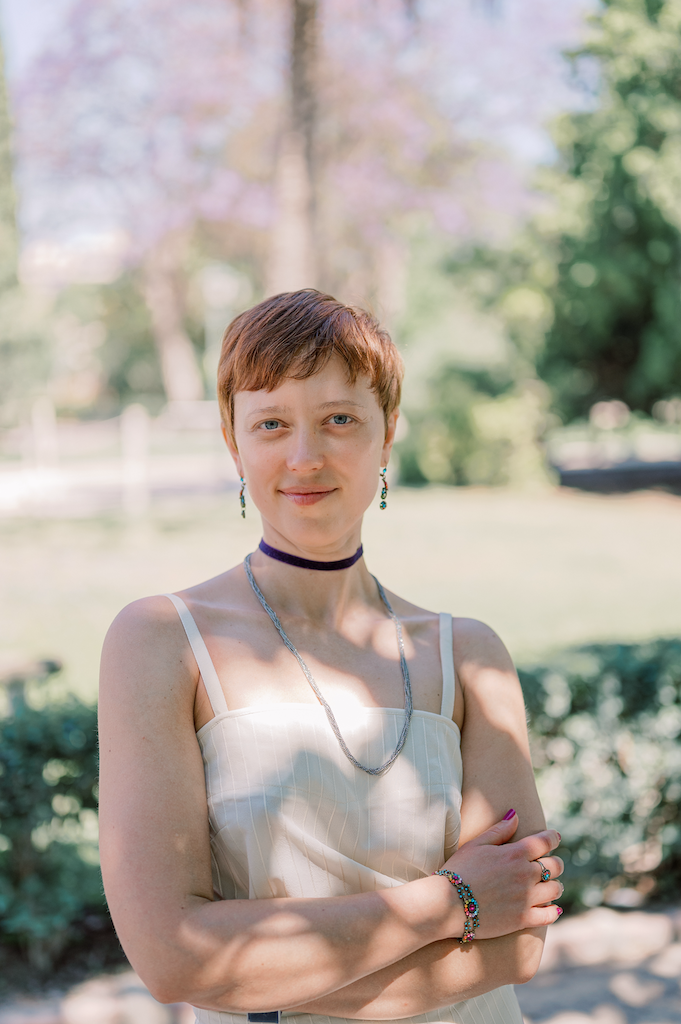
Anna Liebel works as a leadership coach and facilitator in Reykjavik, Iceland, where she supports entrepreneurial leaders and contributes to the local startup ecosystem. She can be found at https://annaliebel.com/ and was formerly the host of Genius Leadership with over 200 episodes featuring leaders from various backgrounds.
Related articles: From Corporate Law to Startup Connector: Q&A with South Summit CEO Nacho Mateo | Iceland Innovation Week 2025: Where Innovation Meets Icelandic Culture | Simone Martinelli’s Journey: Innovation, Community, and Growth
0 comments