Founder Stress: How PR Turns Pressure Into Market Authority
A communications advisor applies Harvard Business Review’s six stress archetypes to startup founders. Her argument: how a leader handles pressure shows up in how the market reads them.
Clara Armand-Delille, Founder of ThirdEyeMedia shared her thoughts on how founders handle stress, and what PR does with it, with StartupReporter.eu.
Venture capital has spent decades trying to quantify elite founders through unit economics, burn multiples and product-market fit. Yet behind closed doors, a founder’s ultimate moat often comes down to a single psychological variable: how they process, internalise and channel founder stress.
Communications advisors have a front-row seat to this dynamic. We watch in real time as internal pressure either breaks a leader or turns them from good to category-defining.
Founder stress: the six archetypes
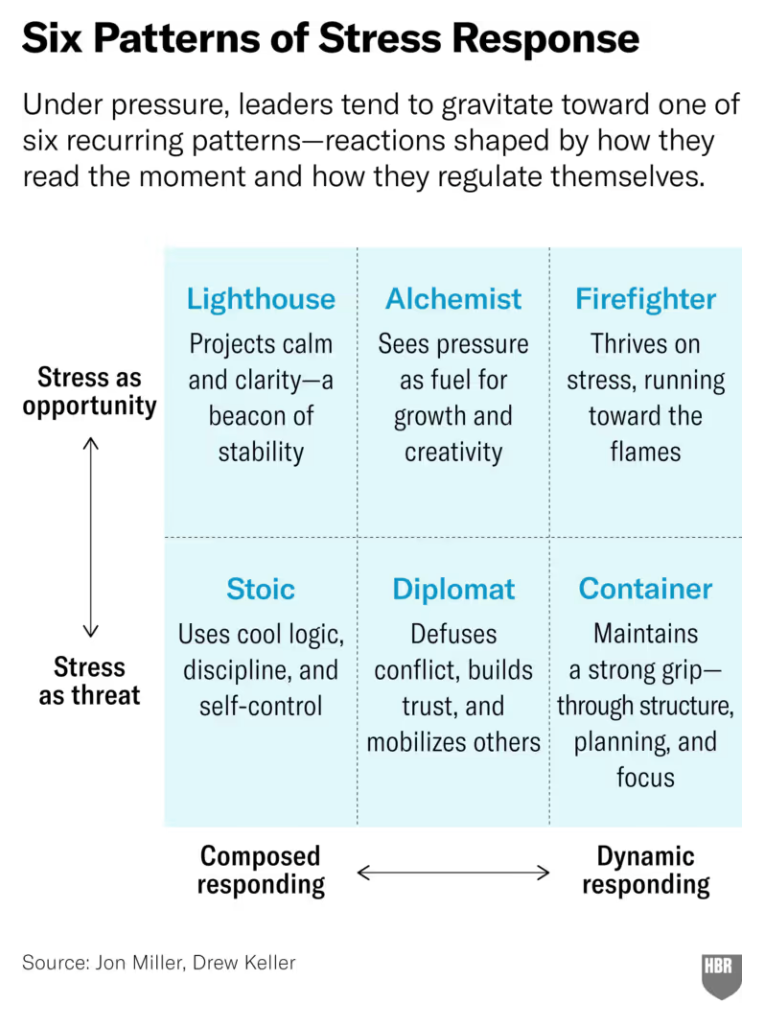
In a Harvard Business Review piece, executive coaches Jon Miller and Drew Keller sort leadership stress responses into six archetypes. They run along two axes: seeing stress as a threat or an opportunity, and responding with composure or dynamic action.
- The Lighthouse: projects calm and clarity, a beacon of stability in chaos.
- The Alchemist: sees pressure as fuel for growth, innovation and creativity.
- The Firefighter: thrives on acute stress, habitually running towards the flames.
- The Stoic: works through cool logic, rigid discipline and self-control.
- The Diplomat: focuses on defusing conflict, building trust and mobilising people.
- The Container: keeps a firm grip on the narrative through structure and focus.
While reactive leaders get trapped in defensive postures, the best founders show fluid psychological agility. In the author’s view, they operate from one sweet spot: the Alchemist.
The Alchemist founder
The Alchemist doesn’t merely tolerate pressure; they turn it into strategic momentum. When a competitor launches a copycat product or macro conditions tighten, they don’t panic. They treat tension as an invitation to sharpen their positioning, re-anchor their value proposition and rally their team around a bolder mission.
Crucially, great founders are fluid. They project the steady vision of the Lighthouse, but when crisis strikes they shift, acting with the speed of a Firefighter and the analytical composure of a Stoic.
From mindset to market authority
A founder’s internal stress archetype shapes how the media sees them. The role of strategic PR is to turn that internal posture into public trust:
- Structural growth (the Alchemist and the Lighthouse): when scaling or expanding aggressively, PR converts internal operational pressure into bold thought leadership, category-defining press hooks and clear signals to investors. When the author’s team worked with Celo to launch stablecoins across Europe and Brazil, the job was to mirror co-founder Rene Reinsberg’s long-term vision: explaining his Web3 thesis to mainstream audiences while building institutional trust.
- Existential threats (the Diplomat and the Container): in a crisis such as a breach, an outage or a public setback, leadership has to switch to threat mitigation. Internally, PR channels the Diplomat, drafting empathetic communications that defuse anxiety and realign the team. Externally, it acts as the Container, building a controlled response that absorbs market panic.
Stress as a market signal
In high-growth tech, stress is a given. What separates volatile startups from enduring market leaders is emotional alchemy at the helm.
Great founders don’t aim for a stress-free environment; they learn to move between composure and action. By working with communications advisors who can translate those internal states into outward positioning, they can turn the pressure meant to break them into a competitive advantage.
AI tools were used to help edit this guest article. The claims are the author’s own.
0 comments