Paula Petcu: “We’re Teaching Machines to Understand Humans”
The Co-founder and CEO of Interhuman AI on why an AI that only listens to your words is missing most of the conversation, the ChatGPT moment that pushed her out of a stable executive career, and what it’s like building in Copenhagen on day two of TechBBQ.
I spoke to Paula Petcu on the second full day of TechBBQ 2026, dialling in from Milan while she was on the ground in Copenhagen between meetings.
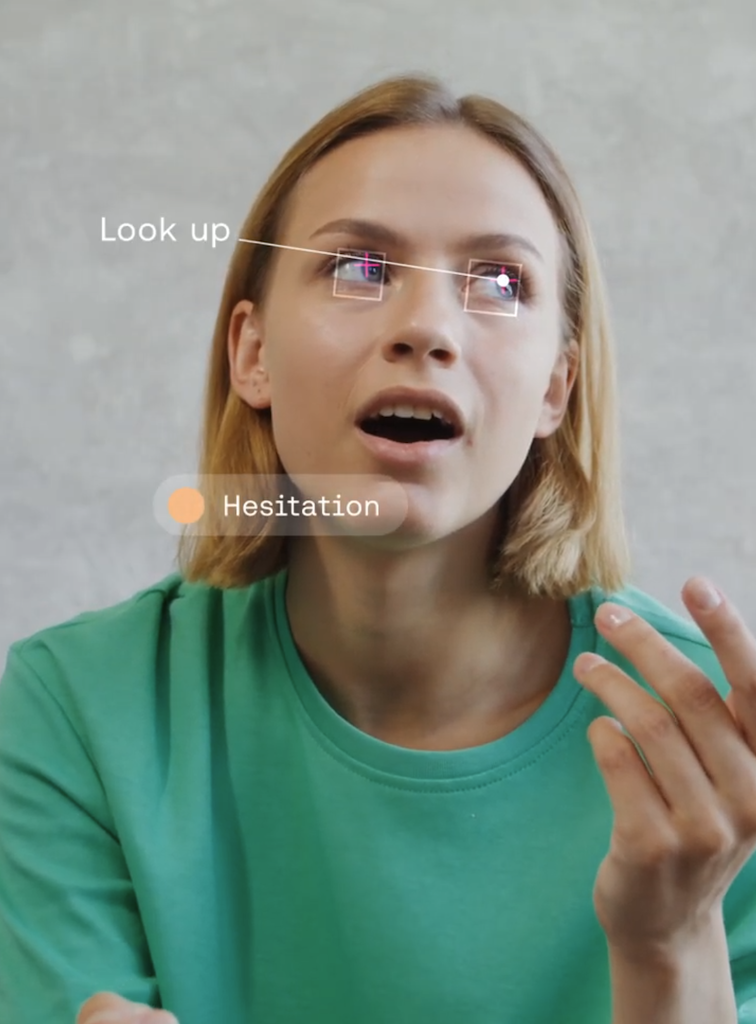
Interhuman AI, the company she co-founded in 2023, builds what she calls a “social intelligence layer” for AI: models that listen to hesitation, confusion, stress and confidence in a voice or a face, not just the words being said.
The company recently launched its first product, Inter-1, and closed a €2 million pre-seed round led by PSV Tech, with EIFO, Yope, Antler and a group of angels from Ada Ventures also on board.
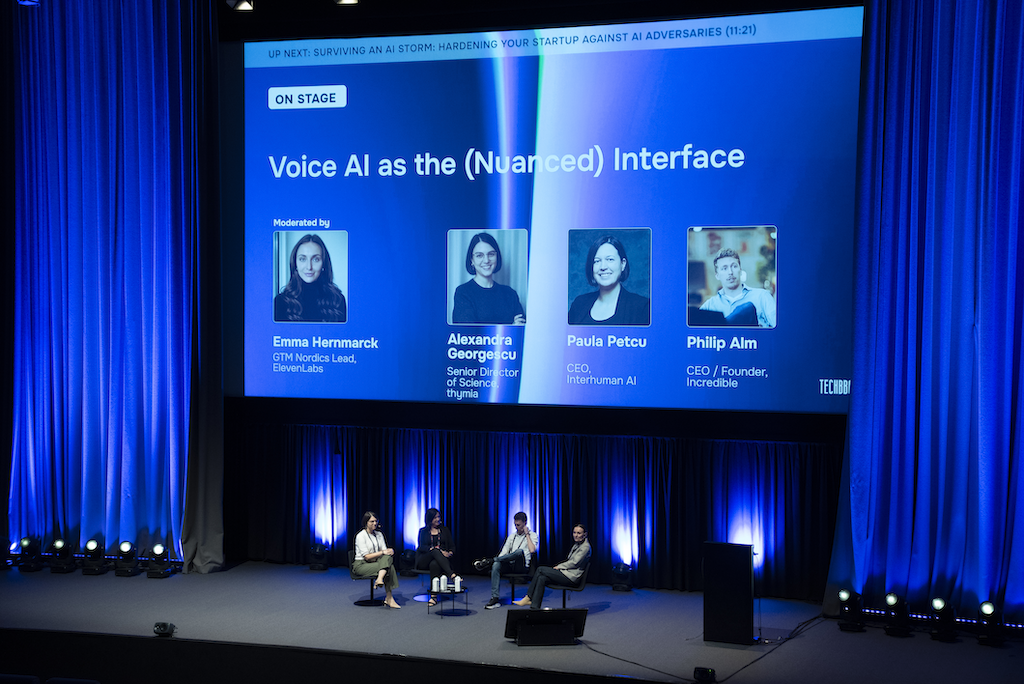
Before that, Paula spent seven years working in digital health at the pharmaceutical company Lundbeck, then two years as CTO at Brain+, building a digital therapeutic for people with dementia. Interhuman AI is her first company as CEO rather than CTO – and, by her own account, the one she almost didn’t start.
“Teaching machines to understand humans”
Sasha: Can you present Interhuman AI in your own words – not the website?
Paula: In one line, we’re teaching machines to understand humans. We’re a bunch of AI engineers and behavioural scientists trying to understand human communication and put that into models that, based on audio and video input, can understand what’s actually happening – is someone confused, are they displaying confidence, hesitation, and so on.
Other developers can then use that in their own applications – training, sales calls, digital health, personal companions, many, many applications. We’re a horizontal layer underneath all of them.
But initially, the company started more from the mental health side. My background is coming from pharma — I worked at Lundbeck, where it was more focused on brain health. Looking at how we can better understand patients in clinical trials, people who have depression, schizophrenia – you can imagine that what a person says and how they say it matters a lot.
That’s where the first ideas came to mind. Initially, it was an AI coach providing emotional support, because it could talk, see and hear you and respond accordingly. But it evolved into something much more, because we became way more ambitious. We want to serve many more markets.
The ChatGPT moment
Sasha: You spent seven years at Lundbeck, then Brain+, before starting Interhuman. Do you remember the moment you decided to leave a stable executive track to found something from scratch?
Paula: It was a feeling that was growing over time, but I think two things contributed. One was more personal; the second was what was happening in the world – I don’t know which came first. This was 2022; I was still CTO at Brain+, and ChatGPT came out. I’d played with the early GPT models and built some applications on top, but when it launched to the world, it was a completely new interface – not just for the nerds, but for everyone.
I’d built chatbots before; I’m an engineer, but this was completely different.
It’s also limited, though – it’s text. So what if you combined it with the models I’d been playing with at Lundbeck, on facial expression, sentiment analysis? There’s something here, I thought. And the question is: who does it?
Then there was the second part. I’d learned a lot throughout my career — startups, consulting, corporate, and being an executive at a startup, working at board level, seeing the CEO fundraise and lead the company. I thought that pain sounds exciting. I also wanted to build something of my own — it’s a different journey than being part of someone else’s company.
Why “hesitation” is harder to define than to code
Sasha: In one of your LinkedIn posts, you wrote that the real challenge is definitional, not technical — that you have to precisely define what hesitation is before you even write the code. Walk me through what that process looks like. Who’s in the room when you define a signal — engineers, behavioural scientists, both arguing?
Paula: It’s a combination. We start from the behavioural scientists — our head of behavioural science, Alberto, is based in Milan, actually. He’s amazing, with his previous work in behavioural science.
He and our collaborators, who are psychologists and other behavioural scientists, review the literature on human communication and these signals – how confusion shows up in facial expressions, body language, hands, and voice – and build a framework of these social signals and how they’re represented.
These could be vocal markers, filler words, longer pauses, or tonality. Some things are universal across cultures, though there are still differences in how long it takes to show them and what’s considered okay to show.
We started with twelve signals; obviously, there are far more if you name every kind of behaviour, but we started with those relevant to the verticals we’re focusing on.
Then the AI engineers get involved, discussing whether it’s actually possible to implement – there’s often too much overlap between signals, like confusion and hesitation, and it becomes difficult to train a model to tell them apart. It’s often not just one signal shown at once either; it can be confusion and agreement at the same time, which makes it even harder to label.
So it’s always back and forth – the engineers try something, see a signal doesn’t represent it well, and we go back to the definition to see if we need to subgroup it. It’s always back and forth to get better accuracy.
The cost of an AI that only listens
Sasha: What you’re describing is the kind of skill that, in real life, only a few people have — the ability to read a room. With AI, you’re giving that as a tool for wider use. How do you get a customer who doesn’t yet know they need this to actually try Interhuman?
Paula: I think the way I say it is: AI has been really good at creating text, creating code, reasoning — but it still fails to understand us as humans. Fails to respond appropriately to what you’re actually saying.
There are cases in sales and in health where you talk to an AI that’s always very happy and agreeing, and you feel like a genius — and it’s inappropriate, because you might be feeling sad, but it just goes along, all jolly and happy.
We’re going to have a lot of voice AI agents deployed in the future — I’m sure you’ve had a call from one. Mine have been a bit off, though they’ll get better. But if a system fails to register hesitation or confusion – things that will impact a company’s revenue – I think we’ll see, on a societal level, an opportunity lost.
It’s a combination of safety and revenue. We’ll see more of this AI interaction not just in calls, but across all agents, and what we say and how we say it becomes entirely different. That’s why we’re working on a model that looks at interaction between people and really understands the social context and, further out, applies to robots too.
If we have AI taking care of our elderly, or in our own homes, we want it to understand, even when we don’t say something and react accordingly.
What building robots and hosting a podcast taught her about people
Sasha: Between building robots, working with AI, and hosting your podcast on founders’ mental health, what have you learned about people: from your point of view working with AI and robots, and then going deep on the emotional side?
Paula: Working with robots was definitely very interesting, because it’s exploring humans, in a way. I feel like we as humans don’t necessarily understand ourselves that well — we don’t go deep enough, and we have our own biases and assumptions.
When I did the founders’ mental health podcast, it was also a bit therapeutic for me — we were exploring what it means to be a founder, a bit of introspection, and whether you can walk the talk on having a healthy life, mentally and physically, while solving some of the hardest challenges you can have. I think the podcast was therapeutic for me, and it was good for my guests too.
With AI now being used as a companion — you saw people annoyed when OpenAI changed a model, because they felt like they’d had a friend and now it was completely different. It’s a bit like the film Her, if you remember that.
I think humans have a need to be heard and understood. A lot of people don’t have someone to talk to, especially elderly people, so having a companion you can talk to is really interesting. Of course, there are dangers in how much you rely on it, but I definitely see an opportunity, and I think it’s a human need.
Beyond warehouse management and manufacturing, I think care is the best current use case for a robot interacting with a human; people get lonelier as they get older; they don’t have the same social support network, and having someone to talk to is really important.
But it needs to be natural; it shouldn’t be the person who needs to learn how to talk. It should be the robot that understands and adapts.
Meeting her co-founders
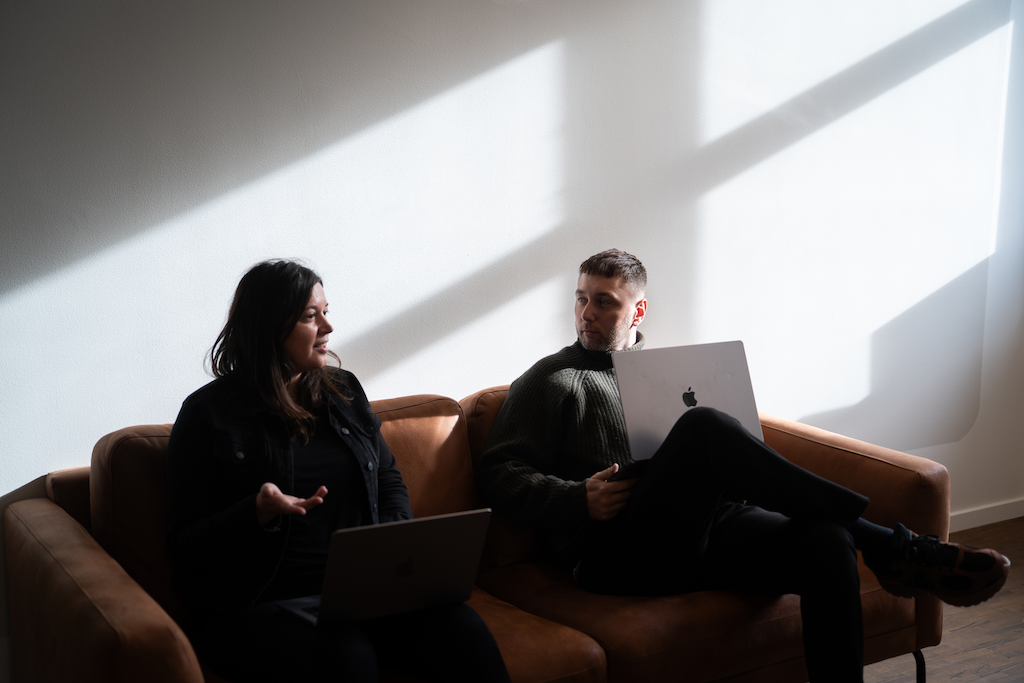
Sasha: Founders often ask how to find co-founders. Can you tell me how you met yours?
Paula: I met my co-founder Line Clemmensen — she’s a professor in AI — when we were both invited to speak about AI in healthcare at a webinar. This was prior to creating any company, just the ideas around the opportunities of AI in healthcare. I presented my idea, and she was the second speaker — she had the research to back it up.
She’d done studies with therapists and patients, a camera on them, looking at behavioural coding — can we see stress, or confusion, or closeness to the therapist? She kept referring back to my presentation too, so afterwards we said, let’s talk.
We met in person; she was working at the Technical University of Denmark, and we had a good vibe around values and what we wanted to create.
She was interested in maybe going into a startup, applying her research somewhere for good. So we started a small research project to see if our ideas were actually feasible.
Months later, someone from Antler, the VC firm, reached out and asked if I wanted to join their next networking event. I’m always up for meeting new people, so I said yes — and that’s where I met our third co-founder, Frederik.
He’d done marketing and commercial work before, and comes from a different background — more of a designer and storyteller. We felt we were too technical and needed someone with a stronger commercial perspective.
We worked together for about four weeks on Antler-facilitated hackathons, and it felt right. Again, it was important that we were aligned on values — before joining the programme, he’d already had his own thoughts on using AI in mental health, which was a great sign.
All three of us started with roughly the same idea, and I think that means something — the good we wanted to do in the world, where our heart is.
My advice for anyone looking to start their own company: build your network. I was invited to that webinar because I knew someone, someone I met through someone else, who I met through someone else again; it’s a network effect you build over years.
You give something, you get something back, but you can’t plan for it. You just need to trust in it.
Building as a foreigner in Denmark
Sasha: You moved from Romania to Denmark seventeen years ago, I moved from Ukraine to Italy around the same time. What has it meant for you to build here as a foreigner?
Paula: As a foreigner coming to Denmark — or any other country — you basically need to rebuild your network.
It’s difficult, because you don’t have the same support as back home, but it makes you develop skills fast, and in some ways I think you become better at it than locals, because you have to rebuild from nothing.
It becomes a natural part of you. It’s said that Danish people can be a bit difficult to make friends with; they have their own social networks, and at 3 pm they’re off picking up their kids. But there are people who are more startup-focused, more adventurous — you build your network and find them.
When I first came to Denmark, my first startup came straight out of my master’s thesis, this was 2011, and the ecosystem didn’t support startups much then. I can see now that things have changed — if you’re a student or researcher wanting to spin something out of a university, there’s far more support. Every university has a lighthouse programme or lab to help bring those ideas into a company.
The ecosystem has changed a lot over the past fifteen years, and it’s had a real impact on the number of companies being created — students already have the idea of building something, and they go and do it.
The view from day two of TechBBQ
Sasha: And with TechBBQ — what does it mean to you, and what are you hoping to get out of today?
Paula: TechBBQ is part of this growing ecosystem, supporting entrepreneurs and making connections. One of the best things is that you bump into people you know, revive connections, and also meet a bunch of other cool people for networking and matchmaking.
It’s grown over time — there’s the main event, and then there are side events too, which are more intimate and focused, and really good for meeting people around exactly what you’re interested in. I’d say it’s the event of the year in Denmark — I always book it in my calendar a year in advance.
I heard from some investors and other participants that they’re skipping Slush this year in favour of TechBBQ. I think it’s getting there in terms of European conferences to go to, which is really nice to see.
Sasha: Any predictions for what people will be talking about in the hallways — is “social intelligence” going to be a buzzword by tomorrow?
Paula: I’m probably a bit biased, but I do hope so! For me, conversational AI is very interesting. A lot of what I heard yesterday was on the sovereignty topic, like last year — and this year’s theme is “Emerging from Agency,” so a lot of it is AI agents, which has implications across coding, optimising workflows, everything.
But interestingly on voice AI — there are more deployments now, even among coders. My developers have bought microphones and are in the office whispering to their computers to code, using something called Whisper Flow. It’s still really weird to me at home, maybe, but in the office?
I was at an event two days ago and the founder of Reporto, previously of Lunar, told me his developers do exactly the same thing. I’ve started talking to ChatGPT by voice myself, and it’s gotten much better. I do think this is the future, which means what we do becomes even more urgent, because if it’s deployed without real intelligence behind it, people will end up disappointed and frustrated.
What she wants people to take away
Sasha: Anything about the startup, or about you, that I haven’t asked but you’d like people to know?
Paula: I think it’s worth saying we’re building a different kind of AI company. A lot of AI companies are focused on productivity and efficiency, doing things faster in business. We’re more on the side of humanising AI, making it work for us.
I don’t think many companies are doing that, certainly not in Europe, if you look at who else is doing social intelligence as a research and product company, I think we might be the only one here.
In the US there are one or two that maybe come close. It’s not easy, because it means we have a harder time telling people why they need us; we’re opening the market for the companies that will come after. But I see the passion in everyone working here, and that carries us.
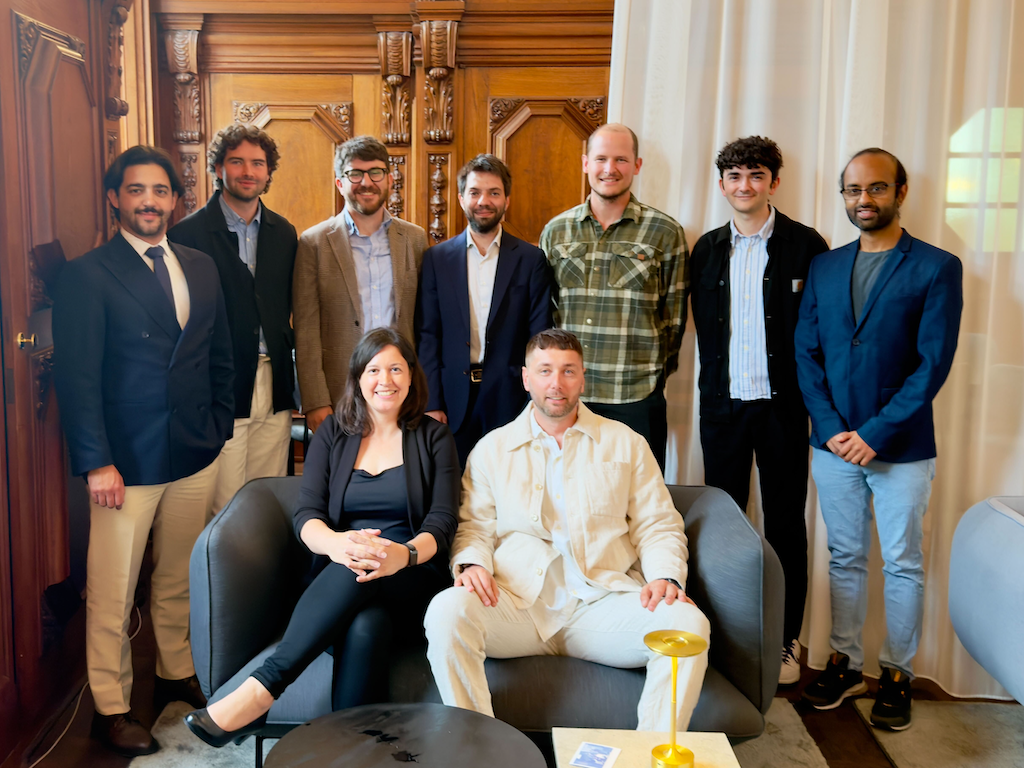
Interhuman AI is headquartered in Copenhagen and has raised €2 million in pre-seed funding from PSV Tech, EIFO, Yope, Antler and angels from Ada Ventures. The company’s first product, Inter-1, detects twelve behavioural signals — including hesitation, confusion, engagement and stress — across audio, video and text. For more information, visit interhuman.ai.
This article was drafted with AI assistance based on a live interview conducted by startupreporter.eu, then edited by the startupreporter.eu team.
0 comments