CleanOS Is Rebuilding Oral Care From the Ground Up — And Betting That Italy Can Build Hardware Too
How a team of childhood friends went from a €350 personalised toothbrush to a subscription-based “oral health company” and what founder Giovanni Tuccari learned about budgets, feedback, and building hardware in Italy.
Most people don’t think twice about their toothbrush. Giovanni Tuccari, co-founder and CEO of Milan-based CleanOS, has spent the last few years rebuilding one from scratch — using an intraoral scan of every customer’s mouth.
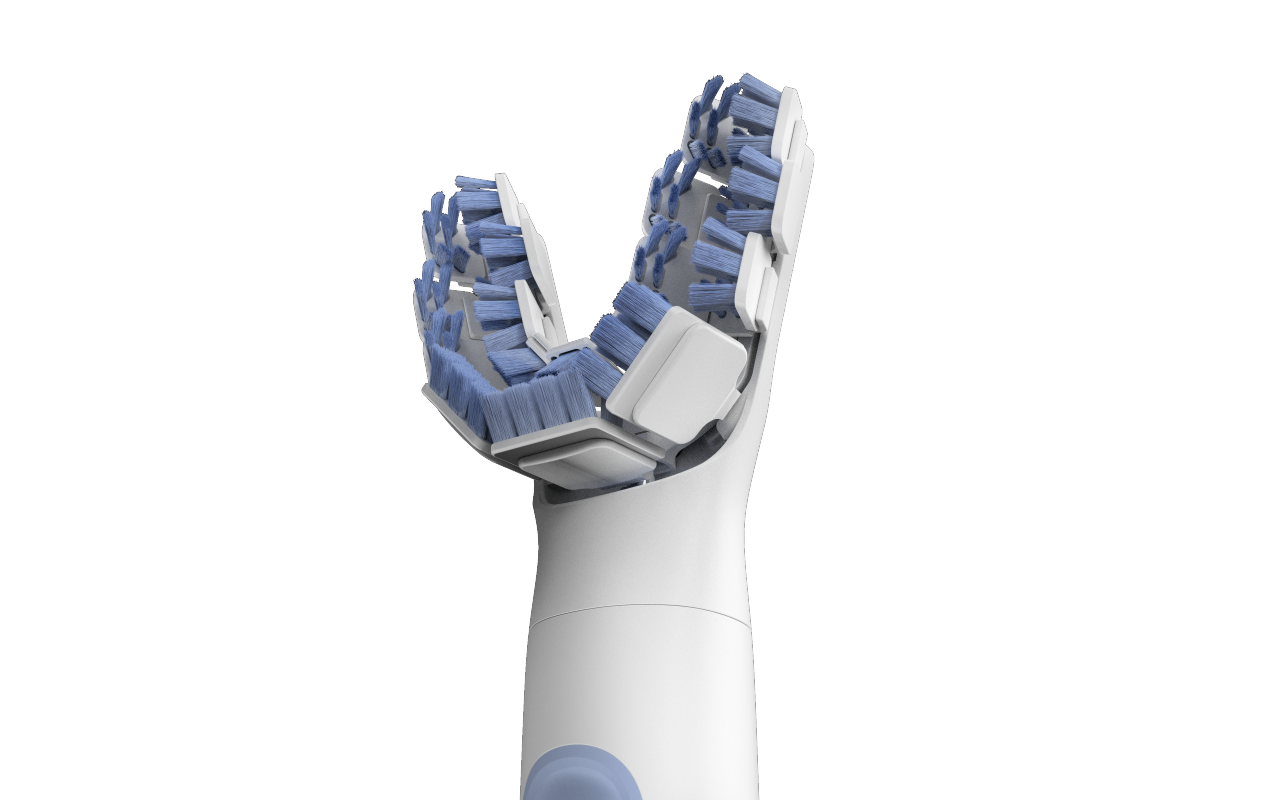
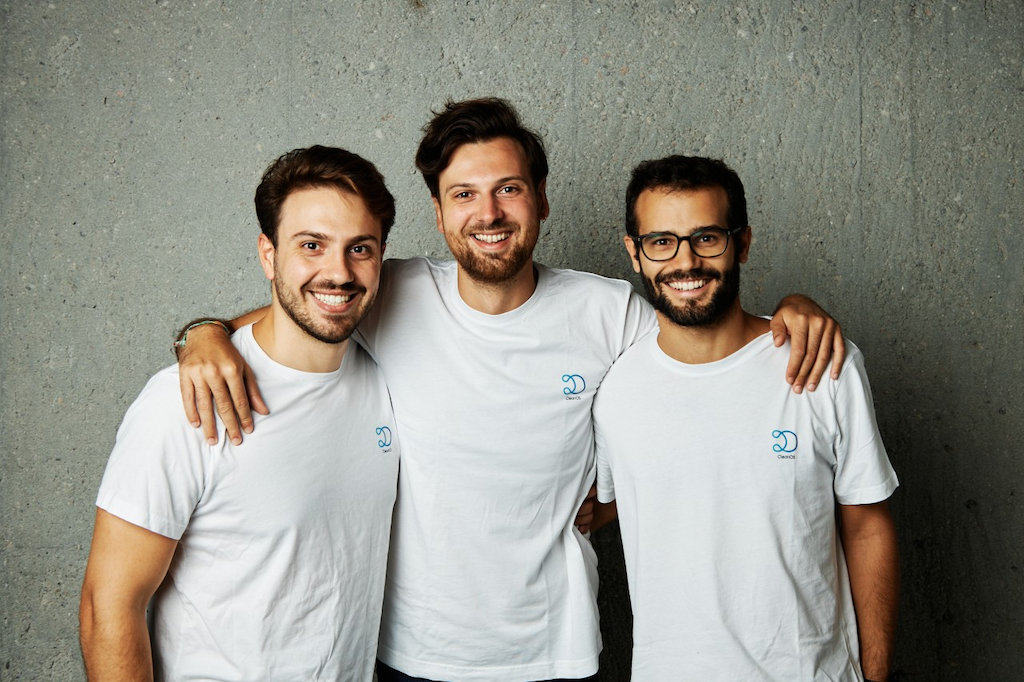
CleanOS makes the Smartbrush, the first electric toothbrush with a head custom-built from a 3D scan of the user’s teeth, designed to clean a full arch in under 30 seconds. Founded in 2024 by three childhood friends — Tuccari (CEO), Pietro Pastore (CMO, a trained dentist), and Francesco Anzalone (CTO, a robotics engineer), the company has gone through Techstars, raised roughly €1.8M to date, and run an equity crowdfunding campaign.
It’s also, by Tuccari’s own account, one of the hardest-funded startups in Italy: hardware and consumer electronics simply don’t have a domestic investment culture to lean on.
I sat down with Giovanni to talk about what CleanOS actually is today (the answer has evolved), how three friends with wildly different backgrounds built a company together, what it’s like to be personally liable as a hardware CEO, and what he’d tell any founder thinking about launching hardware in Italy.
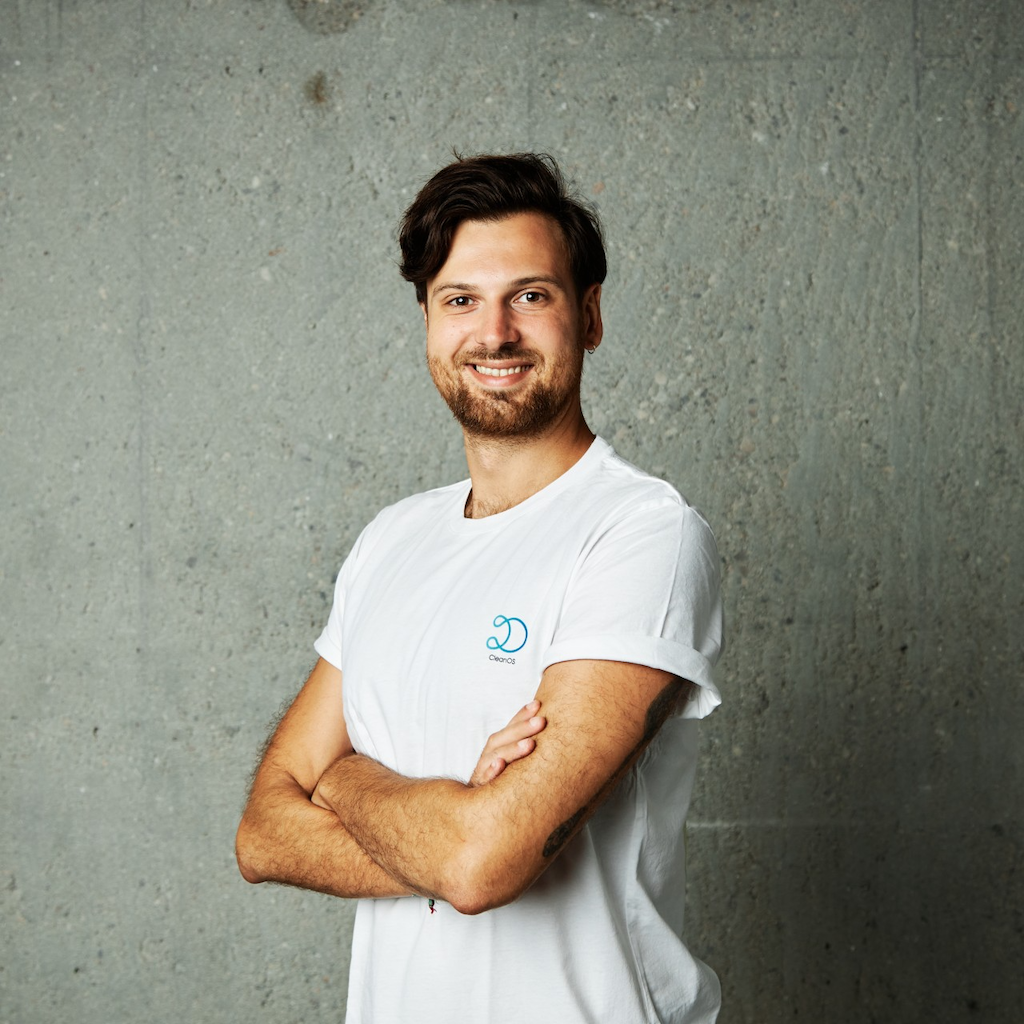
“We See Ourselves as an Oral Health Company” — Not Just a Toothbrush Maker
How would you explain CleanOS to someone who’s never heard of it?
“We make two distinctions, and honestly, this has evolved a lot since we first met at B4i. Our flagship product is the CleanOS Smartbrush, the first electric toothbrush personalised to your mouth, built to deliver medical-grade cleaning in under 30 seconds per arch. That part is simple and clear.
But what we’ve come to realise, through the process of building the Smartbrush and understanding what both professionals (dentists, hygienists) and consumers actually need, is that we’re not a toothbrush company. We’re an oral health company. Our mission is to innovate by making oral care simple and effective, until better oral health is within everyone’s reach.”
“Accessible” is a strong word for a €200 hardware product. How does that square with the pricing?
Tuccari points to a pricing shift launching at the beginning of November: instead of a single upfront payment, CleanOS is moving to a small upfront fee, between €109.99 and €139.99, paired with a monthly subscription of €12.99 to €19.99, depending on tier.
“It’s a much harder call to make with hardware, because you carry all the upfront production costs yourself, and moving to recurring payments is a real cash flow risk — people can just cancel a card and disappear. But the goal is to remove any friction from ownership.
Depending on the tier, we handle head refills, brush re-personalisation, toothpaste refills, and the cleaning tablets that sanitise your device. We’re trying to reach a competitive price not because we can absorb it in our margins like Oral-B or Philips can, but because we want people to actually use a better product — and to simplify either the ownership of the device or the routine itself.”
Beyond the Brush: Diagnostics, Flossing and Oral Probiotics
CleanOS’s roadmap goes well beyond the Smartbrush. Tuccari described three areas the company is actively building toward — organically discovered, he says, through conversations with users and professionals rather than planned from day one.
Home scanning and remote diagnostics. Right now, getting a custom brush head requires an in-clinic intraoral scan or an impression kit sent to your home — a real bottleneck for scale. By the end of 2027, CleanOS plans to ship a small hardware attachment that clips onto your smartphone, letting users scan their own mouths and send the data directly for personalisation.
That same scanning capability opens the door to remote check-ins for patients managing chronic conditions like periodontitis, who currently need to visit a dentist every two to four weeks just for a look, no treatment involved. “If I can give them a tool that replaces that visit, the dentist frees up chair time for patients who actually need active care, and can price accordingly,” Tuccari said. Regulatory compliance means a dentist will still review scans rather than fully automating the system — at least at first.
Electric flossing. Only two in ten people floss regularly in Europe, mostly because it is seen as a hard habit to keep up, yet no brush, including the newest model by Dyson, can actually clean the interdental spaces the way floss does. Consumer electronics is our core competency, so the team can move through hardware development faster and with fewer missteps. Products have already appeared in the US and China, but nothing comparable exists in Europe yet. “We have dentists backing us after testing some of our prototypes,” Tuccari said.
Oral probiotics. CleanOS has also been researching oral probiotics, an area Tuccari calls a genuine departure from the team’s consumer electronics expertise. “We’ve seen a lot of brands grow fast around gut health probiotics. We think the next big trend is mouth health.”
Three Childhood Friends, One Company
You, Pietro, and Francesco come from very different backgrounds. How did the team come together?
“We got lucky, we’ve known each other since middle school, since we were ten years old. That’s always a good story for investors, too. It coalesced organically: Pietro, being a dentist, was frustrated with his patients’ hygiene levels and imagined an automatic toothbrush. I got excited about the market opportunity. We brought in Francesco, who was a robotics engineer, and that was that.
Beyond complementary skills, we got lucky on complementary personalities. I’m the high-energy, hyped-up, let’s-try-to-sell-anything type. Pietro has a high integrity bar; Tuccari jokes he could have been a priest, yet he sees commercial opportunities clearly and is great with people. Francesco is more conservative and grounded, with a sharp focus on the present and on realism. “We balance each other out. It keeps us focused on today while still aiming high,” Tuccari said.
Has that dynamic created any friction?
“What’s harder is bringing new hires into that closeness. We talk to each other very informally, if I say something stupid, someone will just say ‘that’s a shit idea,’ and it doesn’t land as an insult because we trust each other. But that same tone doesn’t always work with a wider team or a new hire who doesn’t have the same context or elasticity for that kind of feedback. It’s something we’re actively working on.”
What Nobody Tells You About Being a Hardware CEO
What have you had to learn from scratch as CEO that surprised you?
“A lot of the technical, industrial and medical knowledge, I expected that. What I didn’t expect was learning how to help a team make decisions, rather than making decisions myself. The idea that ‘I’m the CEO, so I have the final word’ is nonsense, especially in a very American startup narrative. If the team doesn’t have real buy-in, especially under pressure, nothing moves.
The other thing: obsessive budget management. We’ve raised about €1.8 million total, which, for a hardware product, is genuinely tight. The sweet spot would have been closer to €2.5 million; there’s research showing it takes somewhere between €6 and €8 million in Europe to take a medical device from idea to certification.
Understanding exactly where every euro goes isn’t optional, it’s what lets you make decisions without fear, and it’s what stops you from burning money on things that don’t matter, like oversized team-building events or benefits a pre-seed/seed startup doesn’t need.”
Anything that isn’t taught in business school?
“That as CEO, you’re personally liable. Not the company, you, personally. Nobody teaches you that. People think, ‘oh, it’s a Limited Liability Company, who cares’, but that only protects you up to a point. Investors would have to prove mismanagement, but the risk is real, and I think it’s important to go in with your eyes open.”
The Toughest “No’s” — and What They Taught the Team
Has there been a piece of criticism that genuinely changed your direction?
“I think we’re one of the startups in Italy that’s received the most ‘no’s, full stop. There’s just no investment culture here for hardware, let alone consumer electronics — a genuinely brutal industry. You’re dealing with R&D and production headaches, and instead of closing one €2 million contract, you’re selling units €100 at a time.
Most of those ‘no’s came in our intermediate stage, when we didn’t yet have a clear handle on production costs — and that pushed me to become almost obsessive about it. It’s also why the next key hire I want to make is a strong supply chain/production lead: someone excellent at managing production costs, planning, and inventory to minimise waste. That’s exactly what scares investors most.
Pricing was another lesson. Our first price at B4i was €350. Enough ‘no’s later, we understood we had to come down — which ties directly back to getting our cost structure right.”
The Mentors Behind the Founder
Was there a person, inside or outside the startup world, who shaped how you lead?
“Before the startup, I had three or four managers who really formed me. The first was my very first boss, at Intesa Sanpaolo’s London branch — his name was Giovanni Fiorendi, and I think he was the best boss an intern could ask for. He’d meet me at 7 am, before anyone else arrived, just to teach me banking and finance basics. That dedication to other people’s learning stuck with me — it’s part of why I’ve put so much effort into Pietro and Francesco.
When we started, Pietro barely knew how to send a proper email, he’s a dentist; that wasn’t his world. Sitting with him for hours, iterating on presentations, giving him real feedback after calls, ‘you said X, Y, Z, but it would have landed better as Z, Y, X’ — that’s how you spread know-how to technical people so they can raise their own contribution to the team.
It’s also why I pushed hard for us to go through B4i: neither Pietro nor Francesco knew anything about the startup world, and the program at least gave us a shared vocabulary. When you say ‘let’s do a round ‘, and your co-founder doesn’t know what a round is, you can’t even have a strategic discussion eye to eye.”
Advice for Founders: “Think Twice Before Doing Hardware in Italy”
What would you tell an Italian founder about to launch a hardware startup?
“Make sure every critical skill your product needs is actually in-house — that one sounds obvious, but it’s the most common mistake.
On Italy specifically: there’s good and bad. When we went through Techstars, they pushed us hard to relocate to the US. We said no — we wanted to stay an Italian company. On production, that’s paid off: the Smartbrush is 90% made in Italy, 10% in Portugal.
We originally planned to manufacture in China, but between geopolitical uncertainty and the reality that we’re plastic-heavy rather than electronics-heavy, our components come from proprietary moulds, Italian and European suppliers turned out to be genuinely competitive on unit cost, especially since a lot of Italian SMEs have been starved of new projects for the last 10–15 years. When a good project shows up, they’ll quote you aggressively. Northern Italy is also well connected, two hours from almost anywhere in Europe.
There’s real state support, too, we won €650K from Smart&Start, but you can’t build a startup on grants alone. That money only unlocks as invoice reimbursements, so it helps startups that already have some financial traction, not ones just starting out.
The real problem is the investor landscape. Early-stage VCs almost always invest regionally, by statute, not preference. A German early-stage fund invests in Germany, Austria, Switzerland; French funds stay in France. Unless you’re a truly exceptional outlier, you won’t get early-stage capital from abroad. And the Italian early-stage investor pool is tiny; you could count the serious ones in fifteen minutes and they’re heavily SaaS-oriented. It’s a small network, so when one fund says no, the others tend to follow.
The other issue is that Italian funds mostly give what I’d call ‘acceleration capital’, getting you from zero to one, not ‘construction capital,’ the kind of trust-based capital that funds an ambitious, multi-million-euro build. So you raise your first €1–2 million, which is genuinely hard-won, but it lands you at a stage that isn’t yet investable abroad and domestically; people ask, ‘Where are the results?’ benchmarked against B2B SaaS speed, which a hardware company just can’t match on that budget. I know it’s not a nice message. But if you’re building hardware here: think twice.”
One Last Ask
Before we wrapped, I asked Giovanni if there was anything he wanted readers to know that I hadn’t asked about. His answer was simple: buy the product, try it, and post an honest review.
“I buy a bunch of random startup products myself just to test and support them. €100 won’t make anyone poor — try it and tell us how it goes.”
Sasha Komarevych conducted this interview for StartupReporter.eu. AI tools helped transcribe, structure, and edit the raw conversation into this Q&A format; the interviewees reviewed and approved the final text before publication.
0 comments