Atlas People Wants Companies to “Reforecast” Their Organisation the Way They Reforecast Their Finances
A Copenhagen startup bets that the biggest blind spot in corporate decision-making isn’t the market or the money; it’s the assumption that the organisation can simply deliver whatever the plan asks.
Every serious company reforecasts its finances the moment its assumptions change. A market shifts, a target moves, and the model gets rebuilt before anyone commits further.
“The organisation expected to deliver the plan should be reforecast on the same trigger and almost never is,” says Kevin Bjerring, co-founder and CEO of Atlas People. That gap between how rigorously companies model their numbers and how little they examine whether their organisation can actually carry the plan is the entire premise of the company he’s built.

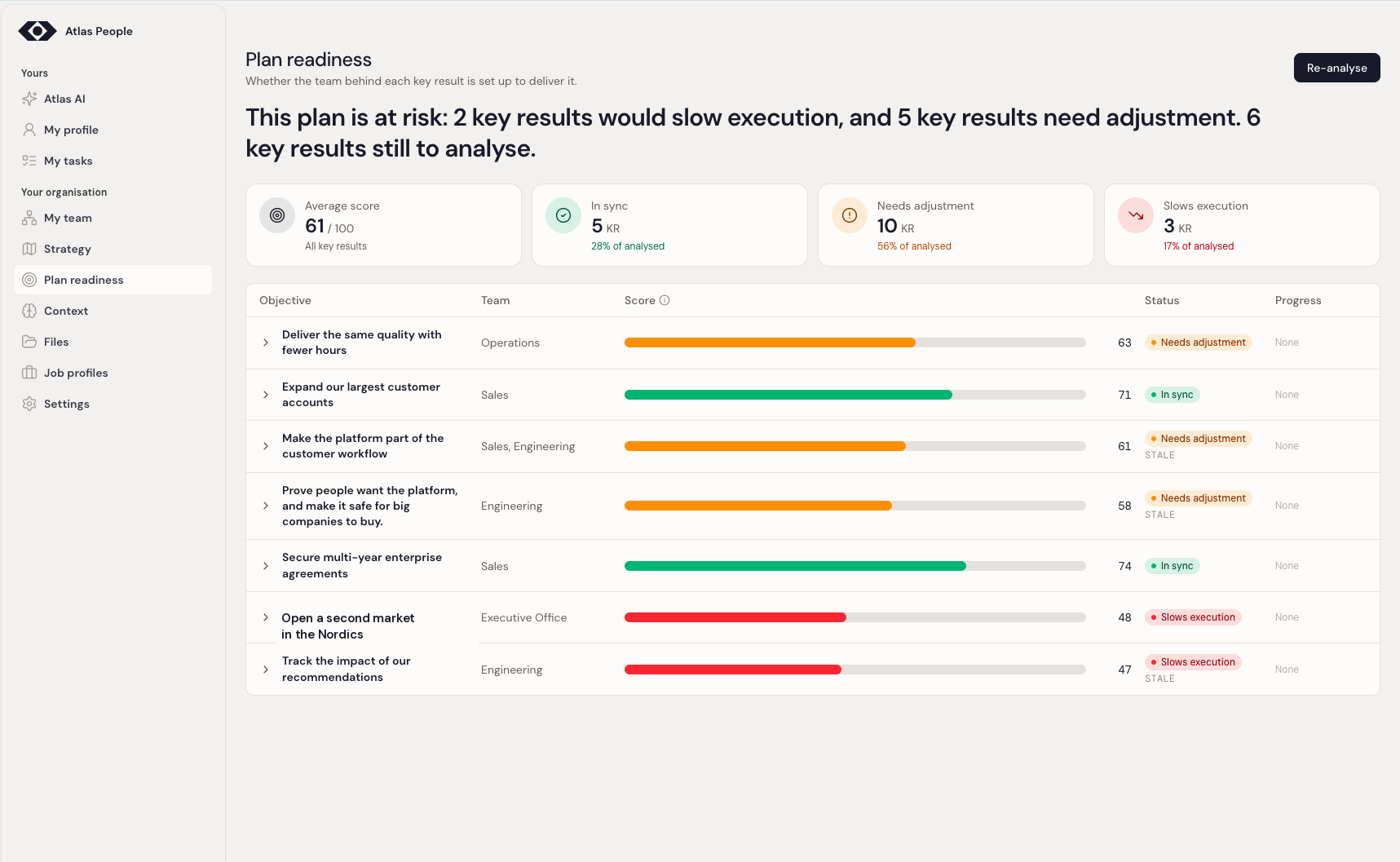
Atlas calls what it does execution intelligence: reading the strategy first how fast decisions need to move, where ownership has to sit, what each role has to carry then mapping the organisation as it actually works, and marking where the two don’t meet.
“Most companies model the money, the market, the strategy, the finance, before they take major decisions,” Kevin told me. “But they always assume the organisation can carry the plan that it will just do what’s in the Excel spreadsheet.” That assumption, largely untested, is where transformations quietly stall.
What comes back isn’t a verdict on people
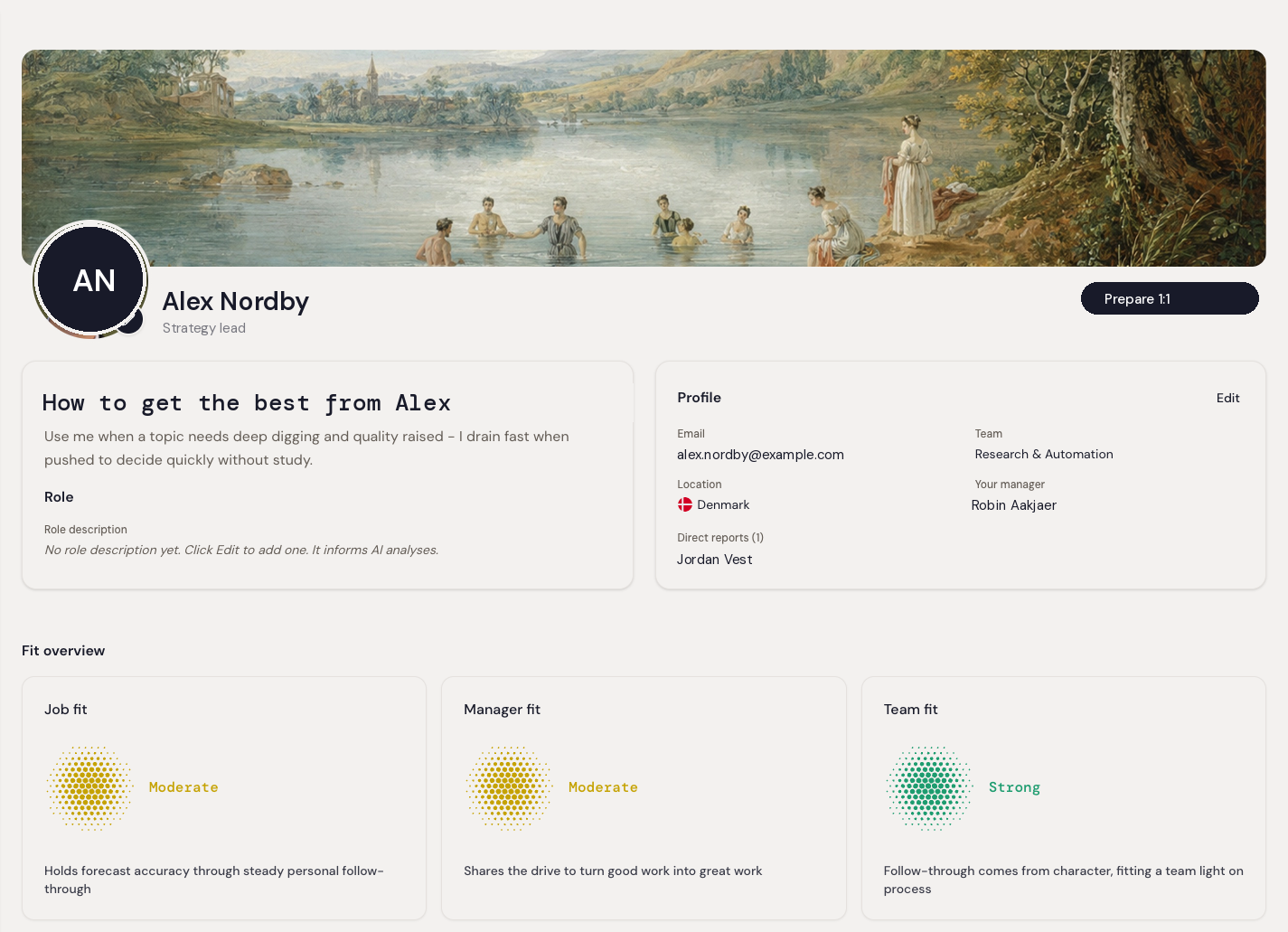
It would be easy to mistake Atlas for a personality-testing tool with better branding. The company is careful to draw a hard line against that reading: it isn’t rating individuals as good or bad, and it isn’t a psychometric vendor describing a person in isolation.
“A survey measures how people feel about the company. A vendor like that describes a person on their own,” is roughly the company’s own framing. “Neither looks at the fit between this plan and this organisation, which is the only thing we look at.”
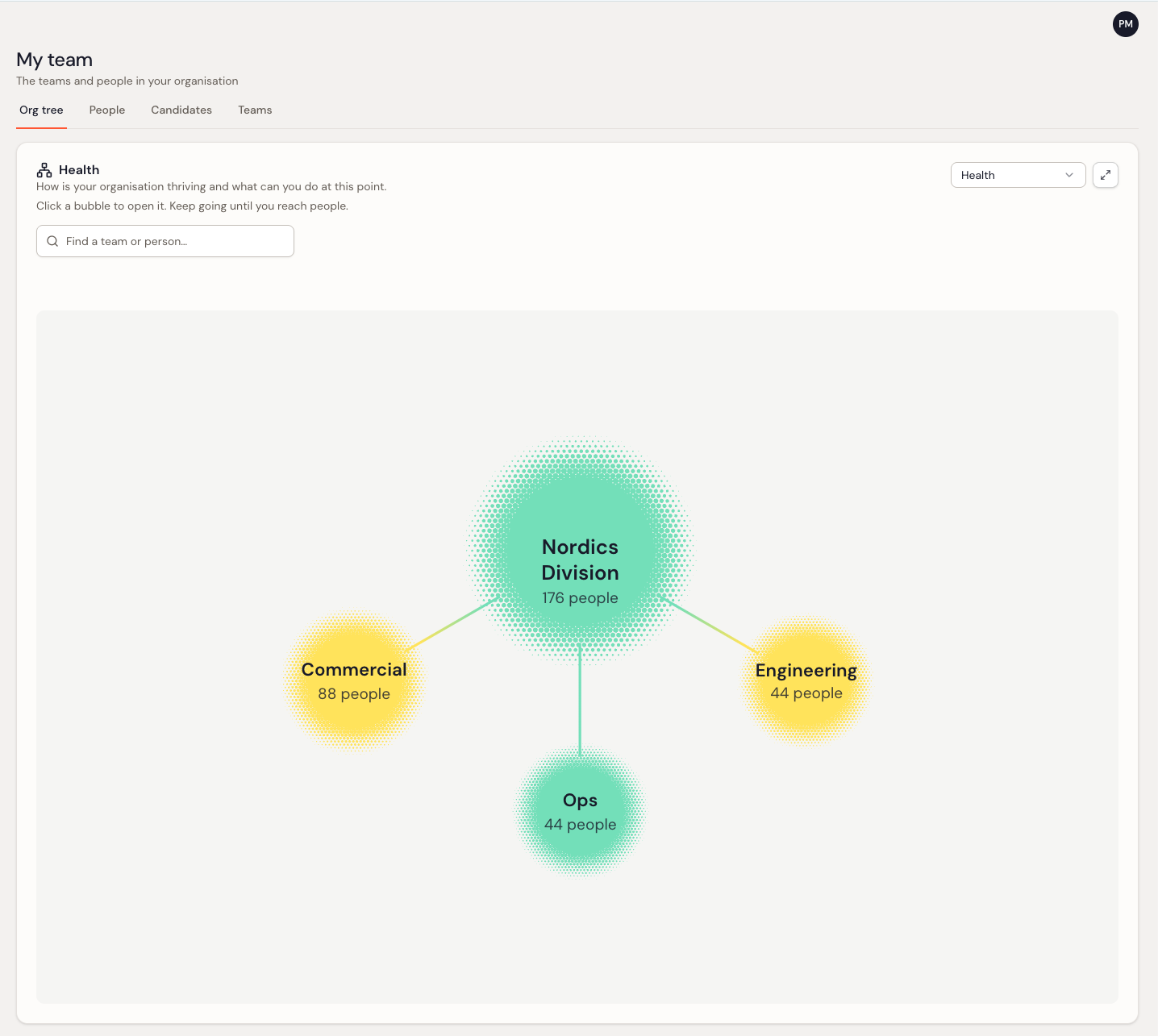
The order of the output makes the point: what comes back is a short list of what to change, in sequence: the plan, the role, the ownership, the sequence, the support and only then the person. Findings are rated green where the organisation is in sync with the plan, yellow where it needs adjustment, red where it will slow execution and, tellingly, blind where the signal simply isn’t there yet. Atlas says it doesn’t know rather than guessing.
“We’re not just another HR tool,” Kevin said clearly during our call. “It’s built for the manager and executive decisions, not for HR to run in isolation.”
Where it actually comes from
Atlas’s read on behaviour traces back to a simple observation Kevin kept running into across two decades of building companies: talented people quietly end up in roles that drain them.
“I kept seeing the same gap between a clear plan and the reality of execution while building companies,” he said. “So often it’s gut feeling that takes the space, and gut feeling is mostly built to listen to threat. We take the bet that feels safest, not the one that’s objectively smart.”
His example: someone highly creative but only productive inside structure might land in a marketing team full of other big-idea people and instead of contributing their own ideas, spend their energy quietly organising everyone else’s. “You can’t reach your full potential if you never start speaking up,” he said. “But that same person might do far better work somewhere more structured, like operations.”
Every person who takes part gets something out of it beyond the company’s use case: Your Atlas, a personal, downloadable document describing how they work best and how others can work with them: something that goes with them when they leave the company, not something the employer keeps.
On privacy: what a person actually writes into the platform stays private, never shown to a manager, a colleague, or the company, as text, a summary, or a pattern. What becomes visible to a manager is the resulting “atlas” itself, and we disclose that to every participant before they answer a single question, not after.
Built for a specific kind of buyer
Two people are usually in the room on the client side, and they own different parts of the decision: a business leader, a managing director, a divisional president; sometimes a group CEO owns the plan, the budget, and the consequences of getting it wrong. HR owns coverage, the data path, and renewal.
“Kevin can generate investor excitement alone, but nobody on the team is built to grind commitments through to signature,” he said of his own team, a line that doubles as a small, honest admission about where even a founder built to sell a vision still needs a different kind of person to close the deal.
Atlas most often enters through HR, sometimes through strategy or transformation teams, and occasionally through the business leader directly, but both sides are pulled in early regardless of the door. The company’s primary market today is enterprise organisations across the Nordics.
Third company, different era
Kevin has founded, acquired, or sold companies for more than twenty years, moving from services into software in the early 2010s: a very different era for building product.
“Ten, fifteen years ago, shipping one small feature was basically a whole company,” he said. “Now you can build software so fast that the real skill isn’t building it; it’s understanding your client well enough to know what’s actually worth building.”
His read on the current moment is less about speed than about intellectual honesty. “Prediction is the fast path to stupidity,” he said. “If you’re not wondering, you’re in trouble. The founders with an edge right now are the ones who stay curious about what they don’t understand; you can ask, get an answer, and reiterate immediately.”
His own productivity hack, self-deprecating and specific: “Being lazy and curious at the same time. If you’re doing the same thing more than three times, that’s the signal to test something new.”
Building in Copenhagen, on purpose
Atlas was founded in Copenhagen in 2024 and spent a year in stealth before its public launch in March 2025. It’s since brought on investors including Peter Lüth, co-founder of Flatpay, and Peter Balslev, former Managing Director at EQT, notable backing for a seed-stage company whose entire product depends on organisations trusting it with sensitive internal data.
Kevin is candid about the trade-offs of building there. “Denmark isn’t an easy place to attract IT talent, and it’s not a very competitive tax environment for founders or investors,” he said. “We don’t have generations of a strong entrepreneurial culture behind us the way some ecosystems do.”
But the constraint doubles as a filter, in his telling, and it lines up with a genuinely deliberate architectural choice: Atlas’s data is hosted in the EU, with the AI running on each customer’s own company account, not pooled into a shared model. “If you can build for Europe, you can build for anywhere, because Europe is where it’s most complicated,” he said.
Reforecasting, not a one-time read
The product is built to be revisited, not filed away after a single engagement. The first reading, an Execution Forecast, is made against a defined plan. When that plan or the circumstances around it change, Atlas runs an Execution Reforecast instead: the same read, updated against what’s actually shifted.
Four events trigger that update: a new strategy or planning period, a reorganisation, a new leader stepping into a unit that’s already been mapped, or a materially changed target.
It’s the same logic finance already runs on and needs no explaining to anyone who’s sat through a quarterly reforecast. Atlas’s bet is that leadership and organisational readiness deserve the same discipline, on the same trigger.
Asked where he wants Atlas in five years, Kevin didn’t reach for a revenue number. “My vision is to give the people with power, investors, CEOs, an honest answer to one question before they commit,” he said. “Can this organisation actually execute the plan?”
Atlas People is based in Copenhagen and currently works with enterprise clients across the Nordics. More at atlaspeople.io.
Sasha Komarevych conducted this interview for StartupReporter.eu. AI tools helped transcribe, structure, and edit the raw conversation into this Q&A format; the interviewees reviewed and approved the final text before publication.
0 comments