Danish AI startup os.energy exits stealth with Osmund, a power retailer that promises zero margin on electricity
Backed by €1M from PSV Tech, the Copenhagen company built its own supplier license and an AI-driven platform to sell electricity at cost — and explain the bill in plain language.
Danish energy tech startup os.energy has emerged from a year of stealth with Osmund, a new electricity retailer built around a single, unusual promise: it won’t make a cent on what customers actually consume.
The company, founded by Niklas Allamand Dib and Maziar Zamani, launched Osmund on August 25 with €1 million in pre-seed funding from Danish early-stage investor PSV Tech.
Unlike most challengers in the space, os.energy isn’t reselling power through a third party — it holds its own electricity supplier license and has built the retailer’s back end, from market data and settlement to customer service, as a single automated platform.
No margin on consumption, by design
Traditional energy retailers earn more the more their customers use — a business model os.energy argues creates exactly the wrong incentives at exactly the wrong moment for the energy transition. Osmund flips it: it sells electricity at cost and earns instead from flat monthly subscriptions and an optional companion app.
Two products are live at launch. Osmund Åben (“Open”) passes through the exact cost of delivering electricity to a household, with the app available as a DKK 13/month add-on. Osmund Rolig (“Calm”) bundles spot-price electricity with a flat subscription that includes the app, aimed at customers who want predictability over optimisation.
“A classic energy retailer earns more the more electricity its customers use. We don’t earn a single øre on consumption,” co-founder and CEO Niklas Allamand Dib said, framing it as a case where the company’s incentives and the customer’s finally point the same way.
Turning smart-meter data into something people can actually read
The other bet behind Osmund is that Denmark’s energy data — hourly and quarter-hourly consumption readings, spot prices, weather — has been sitting mostly unused inside systems built to generate PDF invoices, not insight.
Osmund’s app lets customers ask plain-language questions about their bill or usage and get back a visual answer, drawing on a widget library the team says is modeled on Apple Health rather than generic utility dashboards.
“We built Osmund so transparency isn’t a marketing buzzword — but the very core of the product,” said co-founder and CTO Maziar Zamani, arguing that having no consumption margin to hide is what makes it safe to let AI models loose on explaining the power market to customers.
Founders coming at energy from two different angles
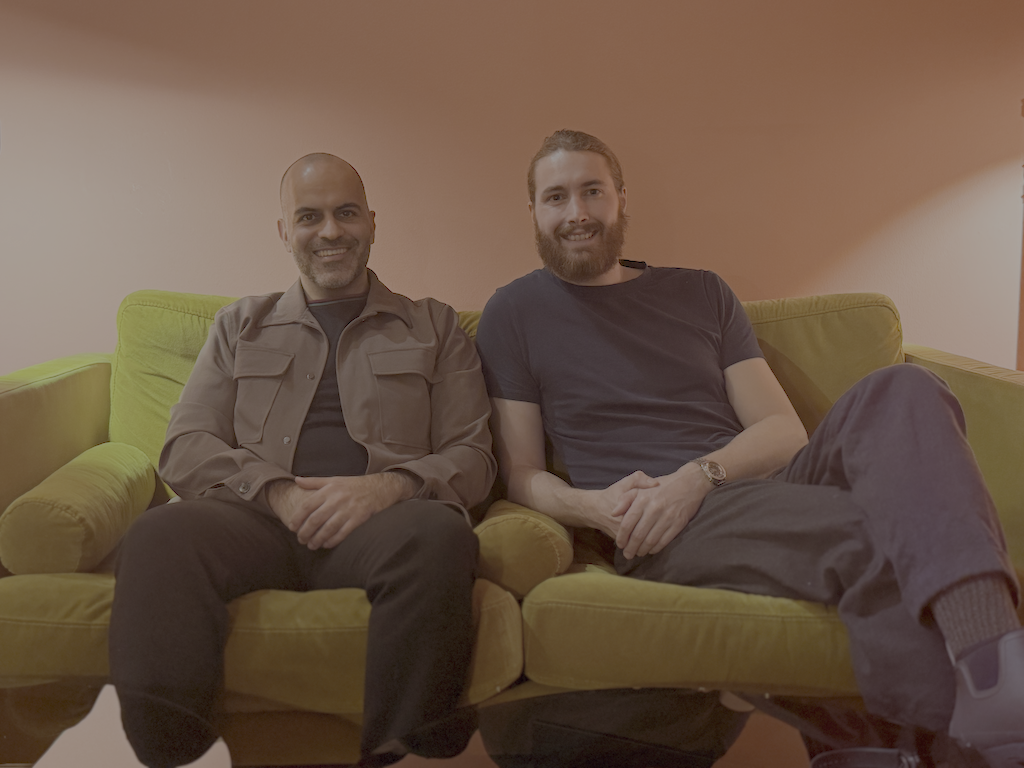
Zamani’s background sits at the intersection of hardware and AI: trained as an electrician before becoming an engineer, he built commercial robots early in his career and later led hardware and software development as founding CTO of Danish motion-capture company Rokoko. He describes os.energy as a return to that hardware-and-intelligence combination, this time applied to the grid.
Allamand Dib’s path ran through climate policy and consulting — International Business and Politics at Copenhagen Business School, a climate specialisation at Oxford, stints at McKinsey and ReD Associates — before he founded home-decarbonization platform Bodil.energy, which partnered with banks and utilities including Nordea, Jyske Bank and Norlys to help homeowners swap oil and gas boilers for heat pumps, batteries and solar.
That experience, he says, convinced him the bottleneck for the green transition wasn’t the hardware — it was a power market too slow to reward flexible, well-explained consumption.
Betting on flexibility, not just cheaper power
Beyond price transparency, os.energy is positioning Osmund as the front end for grid flexibility: intelligent control of EV charging, heat pumps and home batteries that shifts consumption toward cheaper, greener hours. That functionality already exists in early form, with a dedicated product, Osmund Balance, in the pipeline.
For PSV Tech, the appeal was less about the pitch than the proof already in hand. “The team has proven they can add and serve electricity customers at a marginal operating cost of close to zero,” said Sebastian von Wildenrath Wegmann, Principal Investor at PSV Tech and an os.energy board member, calling it the kind of AI-native platform that can reset pricing norms in a market that has moved slowly on its own.
Osmund is live now at osmundenergi.dk and listed on price-comparison site elpris.dk.
Catch them at TechBBQ
The timing isn’t a coincidence: os.energy chose launch week to coincide with TechBBQ 2026, running August 26–27 in Copenhagen. For anyone at the conference, it’s a chance to talk directly with Niklas Allamand Dib and Maziar Zamani about the product, the supplier license, and what “at cost” actually means for the average Danish household’s bill—rather than just reading about it.
This article was drafted with AI assistance from os.energy’s press release and public sources, then edited by the startupreporter.eu team.
0 comments