The Importance of Being First
Lorenzo Bergadano, CTO & Co-founder of Quido AI, has never been anyone’s “first employee.” He went straight from university into big tech and big corporates before co-founding Quido.
But after a summer school session with students at Bocconi, he found himself circling back to a question that doesn’t get much airtime in startup literature: what does it actually mean to be among the first people to join someone else’s company — and why is that path so undervalued compared to “founder” or “employee”?
StartupReporter sat down with Lorenzo to talk about how young people should actually go about choosing a startup, why the first hires at any company occupy a strange, in-between identity, and why he thinks it might be one of the best career moves nobody tells you to make. We then went back to Quido itself and spoke separately with three of the people who took him up on it — to see whether the theory holds up once you’re actually living it.
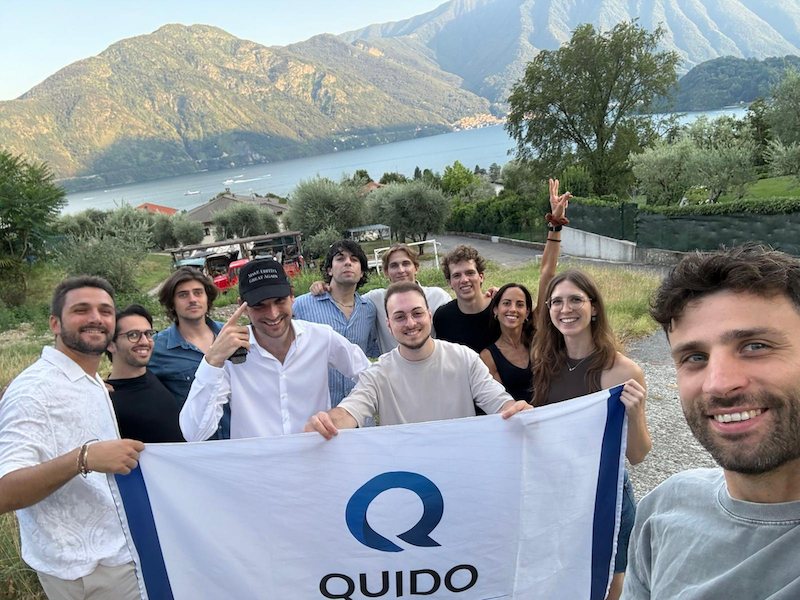
Part One: Lorenzo
StartupReporter: Before we even get to “being first” — you’re actually someone who tells people not to found their own company right away. Why?
Lorenzo Bergadano: I’m one of those founders who genuinely recommends getting some work experience first, at another startup or another company, before trying to build your own. It might sound obvious, but it isn’t: you can’t really know how to run a company if you’ve never worked inside one. Even something as basic as managing people — if you’ve never experienced a workplace and the relationships inside it, it’s hard to start that from zero.
There are a lot of paths a student can take today, whether you’re at university or you’ve just finished school: consulting, big tech, big enterprise, family SMEs or otherwise — or trying to be a founder yourself. What I always suggest to people who feel that pull toward founding something is to start by playing at it first.
A lot of universities now have courses that end with a final project where you try to do a small-scale startup launch. Or honestly, it doesn’t even need to be that formal — you and your friends at a bar can start thinking together, trying to solve a problem. Because at the end of the day, that’s all a company really is: an attempt to solve a problem.
Let’s start with the practical question, then. If a student — or honestly anyone — wants to work at a startup, how should they even go about finding the right one?
Lorenzo: Here’s the thing people forget: early-stage startups, up to a seed round or so, are run by human beings who are completely reachable. We’re not talking about some untouchable CEO or CFO — these are people your age, maybe a few years older, who are on LinkedIn, on Instagram, everywhere. So the first thing I’d do is check whether there’s a feed — a fit — with the founders. Message them on LinkedIn. Ask them for a coffee, a beer, whatever. Have a real conversation and see if there’s chemistry.
The second thing, which can come before or after, is whether you actually believe in the problem that startup is solving. Not the product — the problem. You see it on their site, on social media, and you think: this is genuinely cool, this is something I care about. Maybe it’s fintech because your parents work in finance, maybe it’s something else entirely. If you like the problem and you like the founders, that’s it. That’s how you get in.
You mentioned during our call that there’s a “fourth option” beyond the usual career paths people talk about. What did you mean by that?
Lorenzo: Right, so — whether you’re a university student or not, whether you went to a private university, a public one, or skipped university altogether, you’re generally told there are two or three paths: go and work for the family business, go and work for a big corporate, or start your own company.
What almost nobody puts on that list is the fourth option: go and join someone else’s startup as one of the first people through the door.
And I don’t mean literally employee number one. You could be the third, the fifth, the twentieth. What matters is that you’re there during the part of the company’s life that isn’t explained anywhere — it’s not in the books, it’s not really taught. That’s why I keep coming back to this phrase: the importance of being first.
Why do you think that stage is so overlooked?
Lorenzo: Because of how we’re raised, honestly. From the start, we’re taught to study, then find a job — hopefully one you like — where you report to a boss, maybe several bosses. You bring money home, sure, but ideally you also find something that stimulates you. There’s that saying: if you love what you do, you never work a day in your life.
Founders get a version of that too — everyone hopes the business takes off, that it grows. But what about the person who joins as one of the first employees? That role basically doesn’t exist in how we’re taught to think about careers. It’s not that it’s excluded on purpose — it’s just never been a standard use case.
There’s an old book about chess — about the power of the pawn, how some of the greatest games were won by leaning on the pawn instead of sacrificing it early. People assume the pawn is the first thing you give up. It’s not, or at least it doesn’t have to be.
The first people who walk through a startup’s door aren’t there to be sacrificed either. They’re living with one foot in each world — employee and something more than employee.
What does that “something more” actually look like day to day?
Lorenzo: It comes down to ownership. You might get equity, you might get a decent salary, but beyond that, a lot depends on what you personally do. The founders trusted you enough to bring you in, so you carry founder-level responsibility even though you’re technically an employee.
If you don’t do something today, it can genuinely go badly. Compare that to a big corporate: if you don’t send that one email today, if you don’t make that one sales call — nothing happens. The company doesn’t notice.
So don’t underestimate what someone learns as a first employee at a growing startup, tech or not. It’s a lot of pressure, but it’s a happy kind of pressure. You’re learning to be the employee you were before, but at a level of responsibility you’ve never had. You’re not just executing a task — you’re also thinking about whether that task actually moves the company towards the milestone it’s chasing.
You said earlier you never actually did this yourself. Any regrets there?
Lorenzo: None of it, no — I always went straight into big corporate and tech roles, and now this. I never went through that intermediate step. But I do envy the people who are living it right now, because I think it gives you a kind of energy — a dopamine hit, honestly — that’s hard to get anywhere else.
At the same time, being a founder is a rollercoaster, everyone says it in every entrepreneurship book, and it’s true: there’s the up, there’s the down. The regular employee doesn’t really get either extreme. The first employee sits right in the middle. And I think that middle ground is underrated.
I’d recommend it to almost anyone — and honestly, to myself, if I could go back.
Part Two: The First Ones
After talking to Lorenzo, we went back to Quido and spoke separately with three people who’d taken him up on that fourth path: Gianluca Maiorino, founding engineer, who joined in March 2026 after nearly ten years in big corporate; Ilaria, founding data scientist, who joined in March 2026 after Cerved and Accenture; and Emilio Crespi, founder engineer, who joined in December 2025 after a previous startup called Vedrai and his own venture, Curabit. We’ve laid their answers out as if the three of them were sat at the same table.
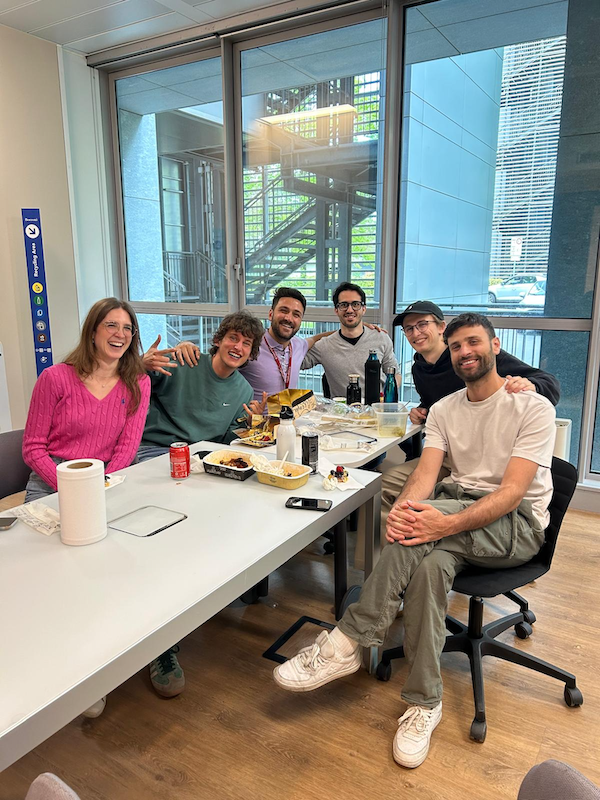
None of them arrived at Quido from the same place, but they all left something for it. Gianluca had spent a decade at a big corporate, straight after university.
“What weighed on me wasn’t the abstract values,” he says. “It was the everyday reality — security policies that kept getting more invasive, to the point where they actively hurt productivity instead of protecting anything.”
Underneath that was a deeper fear, of going back to being a cog somewhere else. “After years of building up experience, I wanted somewhere I could contribute more, not just execute.”
Ilaria’s route ran through Cerved and then Accenture — “structured, serious places,” she says, “but in organisations that size, you feel the hierarchy everywhere. You’ve got very little room to manoeuvre.” She wanted to feel that what she did actually mattered.
Emilio’s path was different again — not corporate, but another startup, then his own venture, Curabit, which wound down at the end of 2025. He met Lorenzo through mutual friends right in that transition. “You could say I arrived at Quido straight off the back of that.”
What did the first week actually feel like?
Emilio reaches for a metaphor: walking into a restaurant, or a bar, still being built. “The people working inside welcome you with open arms, start giving you something to eat and drink straightaway, and while you’re there they get you helping — putting up a shelf, assembling a piece of furniture. And then you realise that’s actually the thing you want to be doing.”
Ilaria remembers something more disorienting than warm: “At a big company, there’s usually a week of onboarding where you don’t really do anything yet. Here, I was working within the hour.”
Gianluca uses the same word she does — disorienting — “but also fascinating. It wasn’t just about getting to know Quido, it was getting to know the whole ecosystem around it.”
That disorientation, it turns out, is mostly about speed.
“The biggest difference from normal work,” Ilaria says, “is how fast decisions get made and acted on. Before, an idea had to go through a manager, then a client, then someone else again just to check the budget — months before anything started. Here: you have an idea, you share it, and within two days it’s already being built.”
Emilio ties it to headcount rather than culture: “Being few in number means big decisions get made without too many people weighing in. When you’re a small group and everyone’s in sync, sometimes you don’t even need to say anything out loud — a gesture, a line of code, is enough.”
Months in, both Gianluca and Ilaria talk about the distance they’ve already covered. “I had to relearn a lot from scratch,” Gianluca says, “constantly wondering if I was up to it. At first it felt a bit like swimming and struggling to catch your breath. Now I’ve got more command of things — I can actually focus on the goal rather than just staying afloat.”
Ilaria puts a number on it: four months in, it feels like a year. “Before, I never made the final call on anything — everything had to be escalated. Now I speak directly to data suppliers, make strategic decisions on my own patch, almost from day one.”
And what about Lorenzo himself, seen up close rather than from across a founder’s desk?
Emilio, who describes himself as a realist — “other people might call me a pessimist” — says what strikes him most is how consistently Lorenzo finds the upside in things, even the bad ones, and how that generates a kind of energy across the team over time.
Ilaria’s answer points somewhere similar, but through growth rather than crisis: what still surprises her, months in, is that Lorenzo and Francesco have stayed as humble as they were at the start, even as the company has gone from two people to nearly fifteen.
“They could easily have let it go to their heads,” she says. “Instead they’re still very down to earth, always open to being challenged.” Asked to put a face to his leadership style, the other two reach for images rather than adjectives.
“I see him as a team captain,” Ilaria says, “one who knows he can’t do everything alone. He leads by example — he shows you how things could be done, not how they should be done.” Gianluca goes further afield: “I’d say a CrossFit coach — a bit biased, I admit.
He adapts the exercise to whoever’s doing it, and stays switched on through the whole workout, because he knows that if you get it wrong, you could get hurt.”
What ties the three of them to each other, more than to anyone who joins later?
For Emilio, it’s the experience lived together — “getting things wrong together, deciding together, celebrating or suffering together, as a small group. You can’t build the same bond with a hundred people that you can with five.”
Ilaria frames it around ownership of the product itself: “You’re the one shaping it, starting from zero, with only a handful of people. Once a company becomes a properly structured organisation, the big strategic calls tend to stay with senior management — whoever arrives early gets to make them from the start instead.”
Gianluca puts it more simply: a shared search for something — the chance to have your say, with humility, and the need to believe in something worth investing yourself in.
Asked what they’d tell themselves on day one, Emilio and Ilaria land in almost the same place, from different directions. “Give yourself one more minute — or a few more days — before making the big calls,” Emilio says, “rather than getting swept up by enthusiasm, or its opposite, into a rushed decision.”
Ilaria’s version: “Take it slowly, one problem at a time. At the start I felt overwhelmed by the responsibility — even though I was never really deciding alone, Lorenzo and Francesco were always there behind me.”
And for anyone reading this who’s never done it?
Emilio wants the piece to be honest about both sides: “Too many articles only show the upside, because it needs to sell. The good: enormous energy, being surrounded by people with that same energy, big decisions to make from early on. The bad: frequent changes of direction, strategies that aren’t always well defined.”
His test for the reader is simple — if you love precision and never changing course, this probably isn’t for you; if you’re dynamic and don’t need immediate stability, it might be exactly right.
Ilaria’s message is more personal: “It isn’t true that you learn more at a big company than at a startup. I wish I’d known that sooner.” It’s a lesson that cost her some friction at the time — she remembers the first reaction from friends and family being closer to “what are you doing?” than encouragement, since most people around her had followed the standard route into big, structured companies.
“In the end, everyone was happy for me,” she says, “because they could see I was happier. But at the start, there was definitely a bit of a shock.”
Gianluca closes on something close to a motto of his own: never settle into your comfort zone, especially when something excites you, not despite it — and don’t be afraid of getting things wrong. Mistakes, so often demonised, are the most powerful tool we have for learning.
Sasha Komarevych conducted this interview for StartupReporter.eu. AI tools helped transcribe, structure, and edit the raw conversation into this Q&A format; the interviewees reviewed and approved the final text before publication.
0 comments