Swish Basket Wants Every Hoop on Earth to Talk to Each Other — and the NBA Is Already Playing
Two kids shooting free throws on the same afternoon, one on a court in Tel Aviv and one on a court in New Jersey — right now, those are two unrelated hoops. Swish Basket‘s bet is that they shouldn’t be, that every rim on the planet can be wired into a single live game. And its opening argument is strong: the NBA is already playing along.

The Tel Aviv startup has closed a $3.2 million pre-seed round and is opening its Seed round today, backed by Aristagora VC — which takes a board seat — alongside Peter Kadas, Nika Capital, and RGE Group. That’s a modest number by hardware-startup standards. What makes it worth a second look is who’s already using the product: the NBA, not as a pitch-deck logo, but as a live deployment.
An AI sensor that turns a hoop into infrastructure
Swish’s hardware mounts above the rim: cameras and lidar track every shot for accuracy, arc, and mechanics, and feed the player instant feedback — no wearable, no setup, nothing to charge or strap on. The system uses computer vision to recognise individual players automatically, so anyone can walk up, shoot, and have the results land on their own profile without checking in first.
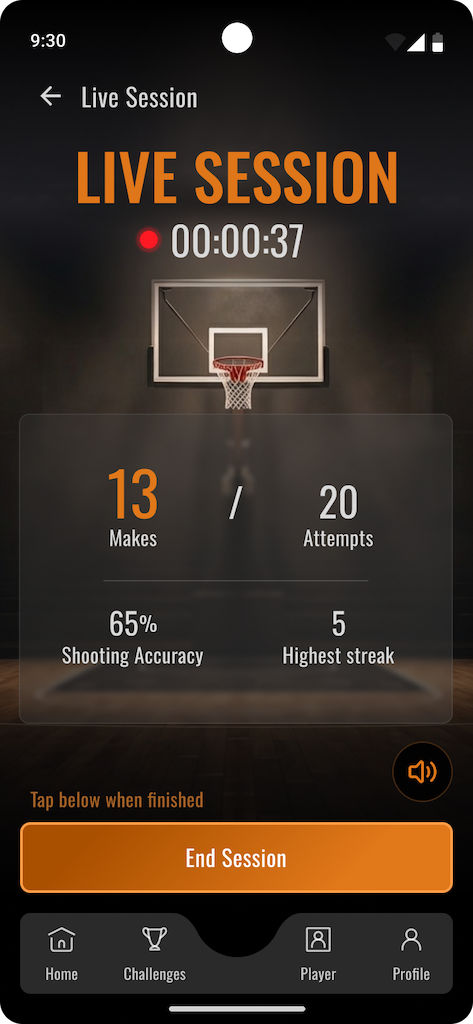
That detail turns a training gadget into a platform. Because the sensor can tell players apart without any action from them, anyone can shoot on the same hoop at once, each syncing to a separate account.
Co-founder and CEO Joel Bar-El calls the result the first real-world online game for basketball — a global skill leaderboard built out of ordinary pickup games rather than an app someone has to remember to open.
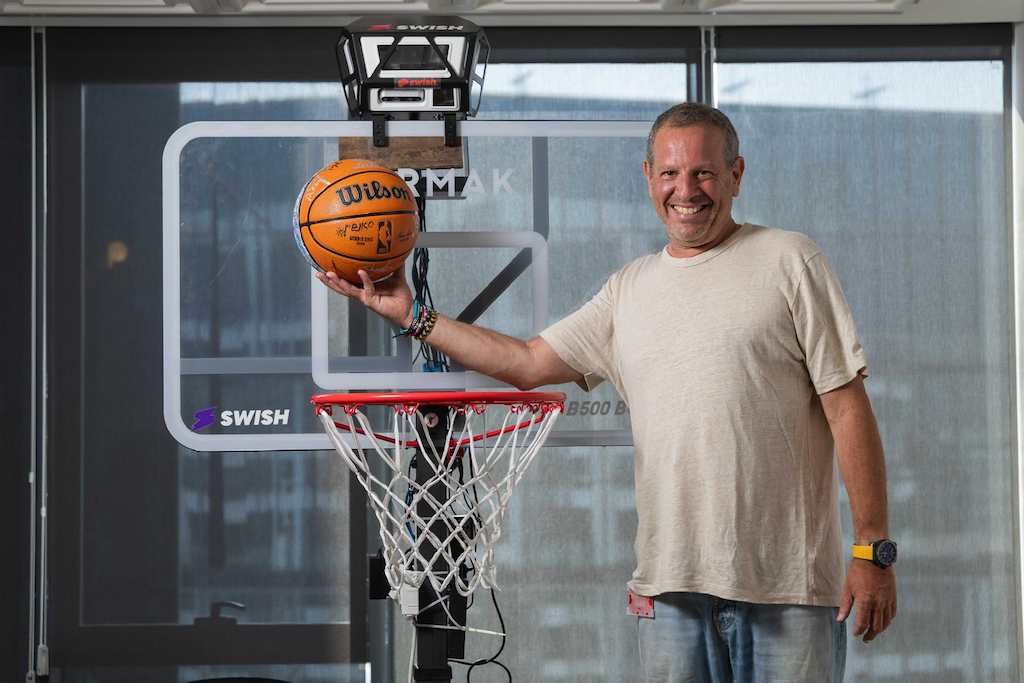
“We are building the connected layer basketball has never had,” said Bar-El. “Technology has finally reached the point where every court, anywhere, can play as one.”
There’s a quieter, more capital-efficient claim buried in the announcement too, worth flagging for anyone doing diligence: Swish says its processing runs on the sensor itself rather than in the cloud, which is what lets the company talk about reaching tens of thousands of courts without its infrastructure bill scaling in lockstep.
Why the NBA signed on first
Most hardware startups spend years chasing a flagship customer. Swish got the NBA early, through the league’s 2026 Launchpad program, and the relationship has moved well past pilot theatre — the system is deployed and generating data at NBA-run international basketball schools, and Hall of Famer Mitch Richmond has demonstrated it on stage.
The company says it’s now live in five locations spanning Europe, Asia, and the US, with hundreds of players and tens of thousands of tracked shots recorded so far.
One recent US deployment ran a multi-hoop tournament where teams competed head-to-head in real time on separate courts, all ranked against a single shared leaderboard — a small-scale proof of the bigger claim: that distance stops mattering once every hoop runs on the same layer.
The founder has done this before
If Bar-El’s confidence sounds rehearsed, it’s because the playbook is. He spent close to fifteen years building Trax, the computer-vision company that reads retail shelves — is the product in stock, priced right, placed where the planogram says — and watched it cross a $3 billion valuation before stepping back from day-to-day operations in 2024.
Swish applies the same instinct to a different surface: point a camera at something humans already do constantly, read it with a model in real time, and turn the result into data nobody had before.
Aristagora VC’s Anat Tila Cherni, who led the round, is betting explicitly on the repeat:
“This team has built category-defining technology before, and the early traction across multiple markets shows the same pattern taking shape.”
What the seed round is actually for
According to the announcement, the fresh capital is earmarked for three things: rolling out the first commercial installations internationally, growing the sensor and AI engineering team, and standing up US marketing and community efforts. That’s the pitch, essentially: same founder, same computer-vision core, a market — sport — that has never had this kind of connected infrastructure at grassroots level.
The question worth asking next
Swish is candid that its computer vision runs on facial recognition to identify players automatically — that’s precisely what makes the “no manual setup” pitch work, and it’s also the detail that will draw the most scrutiny as the company expands into markets with stricter biometric-data rules than Israel’s or many US states’.
A company betting on frictionless identification at the level of “every park hoop on Earth” will eventually have to answer, market by market, how it handles biometric consent for minors — its core Launchpad demographic — and what happens to the data once a kid stops shooting.
0 comments